Australia politicizes its cooperation with China over Darwin Port
Prime Minister Albanese said on Jan. 28 that Australia is committed to reclaiming the lease of the strategically important northern port of Darwin—which is currently leased to a Chinese company—as it aligns with Australia’s national interests.
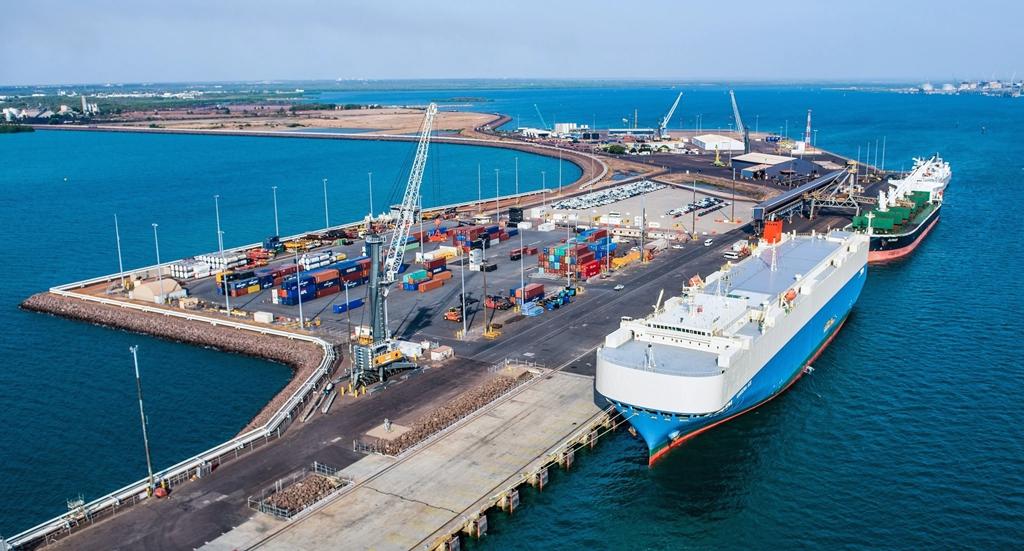
A view of the Darwin Port
The lease for Darwin Port began in 2015 when the government of Australia’s Northern Territory leased 99-year ownership of the port to the Chinese-owned Landbridge Group for AUD 506 million. Since his re-election, Albanese has repeatedly pledged that his government would reclaim Darwin Port.
At its core, the controversy over Darwin Port is a politically driven maneuver fueled by Australia’s strategic anxiety, which deviates from commercial logic and international norms. Australia’s strategic reliance on the United States could severely damage China-Australia relations and undermine its own credibility.
Although multiple rounds of Australian reviews have indicated that the sale of Darwin Port to a Chinese company does not pose any so-called "national security risk," Albanese still claims that the deal does not align with Australia’s national interests.
On the same day, Chinese Ambassador to Australia Xiao Qian said, "If the Landbridge Group is forced to withdraw from the port, I believe this could also affect substantive investment, cooperation, and trade between Chinese enterprises and businesses in the Australian region."
Australia’s fixation on Darwin Port is, in essence, a politically driven anxiety held captive by security narratives rather than a rational, calm calculation of national interests. If "political disapproval" alone can overturn existing commercial contracts, it will be difficult for Australia to continue presenting itself as a "safe, stable, and predictable" destination for investment in the future.