Why Indonesia revokes permit for Batang Toru hydro project
Indonesian President Prabowo Subianto has announced the revocation of operating permits for 28 enterprises, including the Batang Toru hydropower project. This move has caused shockwaves in international energy, environmental protection, and diplomatic circles.
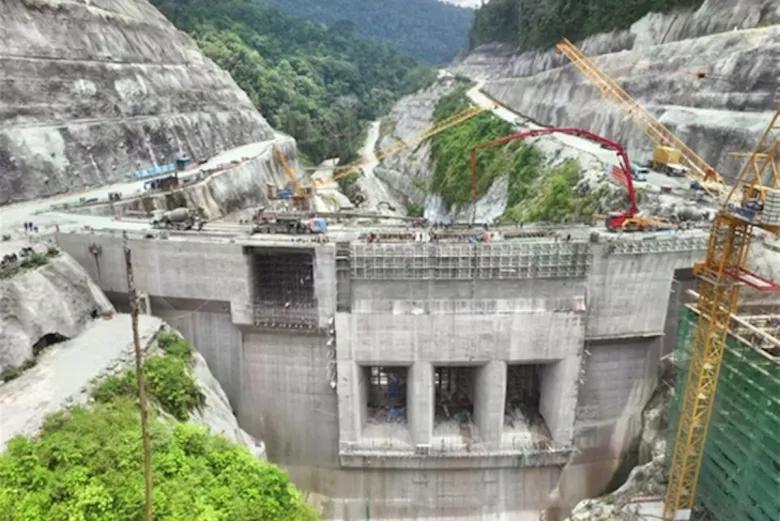
Site of the 510MW Batang Toru hydropower project
The direct cause of this incident was the extreme weather conditions that hit Sumatra, Indonesia, at the end of 2025, triggering floods and landslides that resulted in approximately 1,200 fatalities. Post-disaster audits revealed that "excessive development within the Batang Toru ecosystem (including deforestation and slope construction) severely undermined natural buffering capacity and exacerbated flood losses."
On January 20, 2026, Prabowo signed the revocation order based on a special forestry task force investigation report. He emphasized, "These enterprises violated forestry and environmental protection regulations and must be held accountable for the ecological disaster."
The 510MW Batang Toru hydropower project is located in the sole habitat of the world's most critically endangered great ape, the Tapanuli Orangutan. Scientists have warned that the dam construction would fragment the species into isolated groups unable to communicate, leading to their extinction.
Despite these concerns, however, the project had received consistent support from the Indonesian government for most of its development period, becoming a flagship project of China-Indonesia cooperation and a key energy collaboration under the Belt and Road Initiative. Indonesia had originally planned it as a milestone for Sumatra's green energy transition, with operations scheduled to commence in October 2026.
Analysts pointed out that one possible reason for this revocation is Prabowo's urgent need to demonstrate his commitment to protecting public safety and upholding eco-justice through "iron-fisted governance" in the face of severe natural disasters. Revoking the permits serves as a political statement aimed at diverting public criticism of the government's regulatory shortcomings.
Notably, officials from the Indonesian Ministry of Energy and Mineral Resources said that they had not been consulted before the president made his decision. This reflects the internal power struggle within the Prabowo administration between prioritizing "economic development" and "environmental security," while also highlighting Prabowo's individualistic decision-making style.
Currently, enterprises whose permits have been revoked, such as North Sumatra Hydro Energy (NSHE), have submitted applications for re-audits. The situation may evolve into prolonged administrative reviews or legal disputes.
Other analysts have noted that given the project is nearly 96% complete (with tunnels and the main dam structure largely finished), completely abandoning it would result in significant economic losses. The government may later allow the project to "revive in a greener manner" or transfer it to state-owned enterprises, transforming "international capital" into "national capital." However, such an outcome would cause deep concern among international investors, including Chinese stakeholders.
Source: Little Red Note