Residing amidst World Heritage sites in Yunnan
With its diverse natural geography and splendid culture, Yunnan Province is home to six World Heritage Sites that proudly showcase the rich civilization of China. These sites include the Old Town of Lijiang, the Natural Landscape of Three Parallel Rivers, the Stone Forest, the Chengjiang Fossil Site, the Cultural Landscape of Honghe Hani Rice Terraces, and the Cultural Landscape of Old Tea Forests of the Jingmai Mountain in Pu’er. Each site has its own unique story, shaped by the people who call these places home. In this issue of our newsletter, we invite you to explore the captivating stories of the guardians of the World Heritage Sites in Yunnan Province. These individuals play a crucial role in protecting and preserving these precious world treasures.
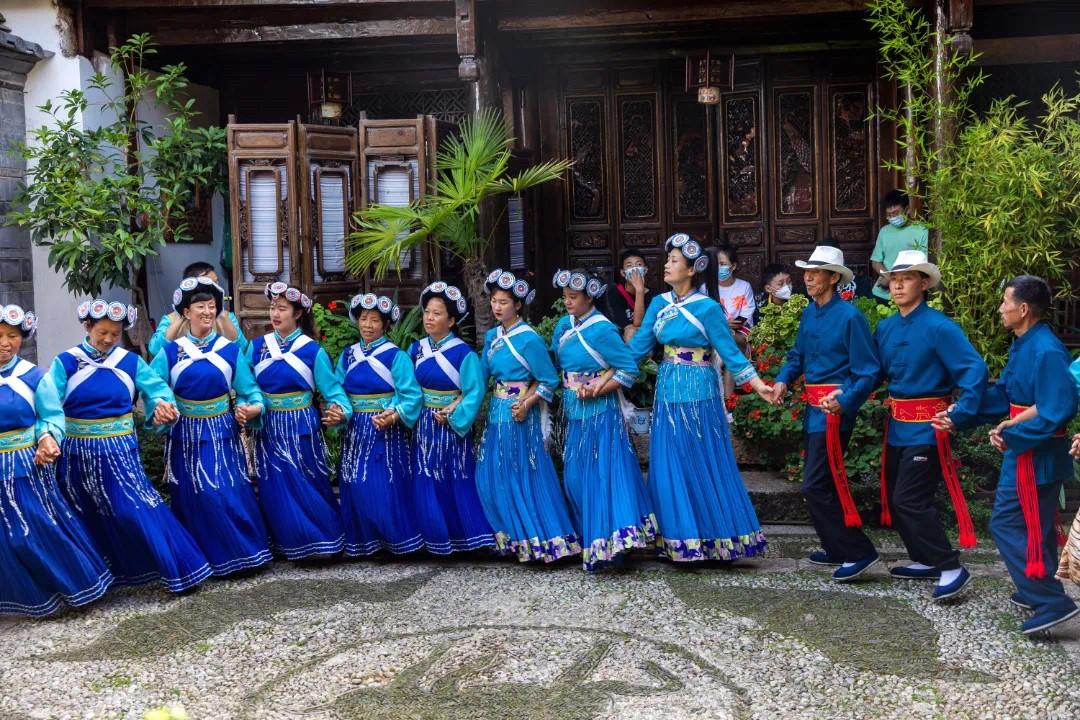
Accompanied by the melodious tunes of “remeicuo” music and light-hearted dance steps, traditional Naxi folk song and dance brings to life the rich cultural heritage.
I. Old Town of Lijiang -- The tales of the Old Town and its inhabitants
In the Old Town of Lijiang, culture serves as the lifeblood that defines its essence. Locals actively engage in safeguarding and passing on this rich heritage, allowing it to seamlessly blend into every facet of modern life.
In the Heaven and Earth Courtyard of Dayan Old Town, Lijiang City, Yunnan Province, visitors are treated to a mesmerizing display of traditional Naxi folk song and dance. Accompanied by the melodious tunes of “remeicuo” music and light-hearted dance steps, the show brings to life the rich cultural heritage of the Naxi people.
“Remeicuo,” an enduring tradition that has been passed down through thousands of years, holds a special place as a collective folk song and dance of the Naxi people. At the Heaven and Earth Courtyard, tourists have the privilege of witnessing this “living fossil of song and dance.” He Xueguang, the 78-year-old manager, explained to visitors, “It is our ancestors’ remarkable legacy that has enabled us to lead a joyous and fulfilling life. Only by safeguarding and perpetuating our cultural heritage can we breathe life into the story of the Old Town.”
Every day, like clockwork, the ethnic song and dance performances commence at the Heaven and Earth Courtyard. Regardless of the crowd size, the passionate actors and actresses wholeheartedly devote themselves to the show, which has gone uninterrupted for over 2,000 days. These performers encompass a diverse range of backgrounds, including ordinary citizens, farmers, and college students. Spanning the generations, from the elderly to the middle-aged and the young, they bring the vibrancy of traditional culture into the homes of common people, and ensure that the essence of traditional culture remains alive and accessible to all.
The Dongba pictograph is known as “the world’s only living hieroglyphics” and serves as a “living fossil” of ancient civilization. It is also an important part of the Naxi cultural heritage. In 2003, the Naxi ethnic group’s ancient Dongba literature manuscripts were included in UNESCO’s Memory of the World, making it China’s third entry in the list.
An artwork featuring the “dancing” Dongba characters written on Dongba paper is an ideal keepsake. Visitors can have an excellent “writing and painting” experience at the Naxi Pictograph Painting Studio, which is located in Xianwen Lane, Guangyi Street, in the Old Town of Lijiang.
The studio is brimming with an assortment of Dongba paper. When presented on the unadorned Dongba paper, the animated Dongba hieroglyphics exude their own charm. The Dongba paper adorned with depictions of flowers, grass, birds, and animals silently narrate untold stories... Every symbol and every hue serve as a testament to the progression of an ethnic community.
Since its establishment in 2016, the Naxi Pictograph Painting Studio has welcomed over a million visitors and hosted over a hundred complimentary open classes. For its manager, He Runyuan, the most joyous moments come when he writes or paints the desired Dongba hieroglyphs for the visitor
“It is also an innovation for us to incorporate Dongba pictographs into couplets, booklets, lanterns, paintings, and plaques,” He said. Recognizing the extensive journey ahead to preserve cultural heritage, he earnestly hopes that more individuals will participate in this endeavor.
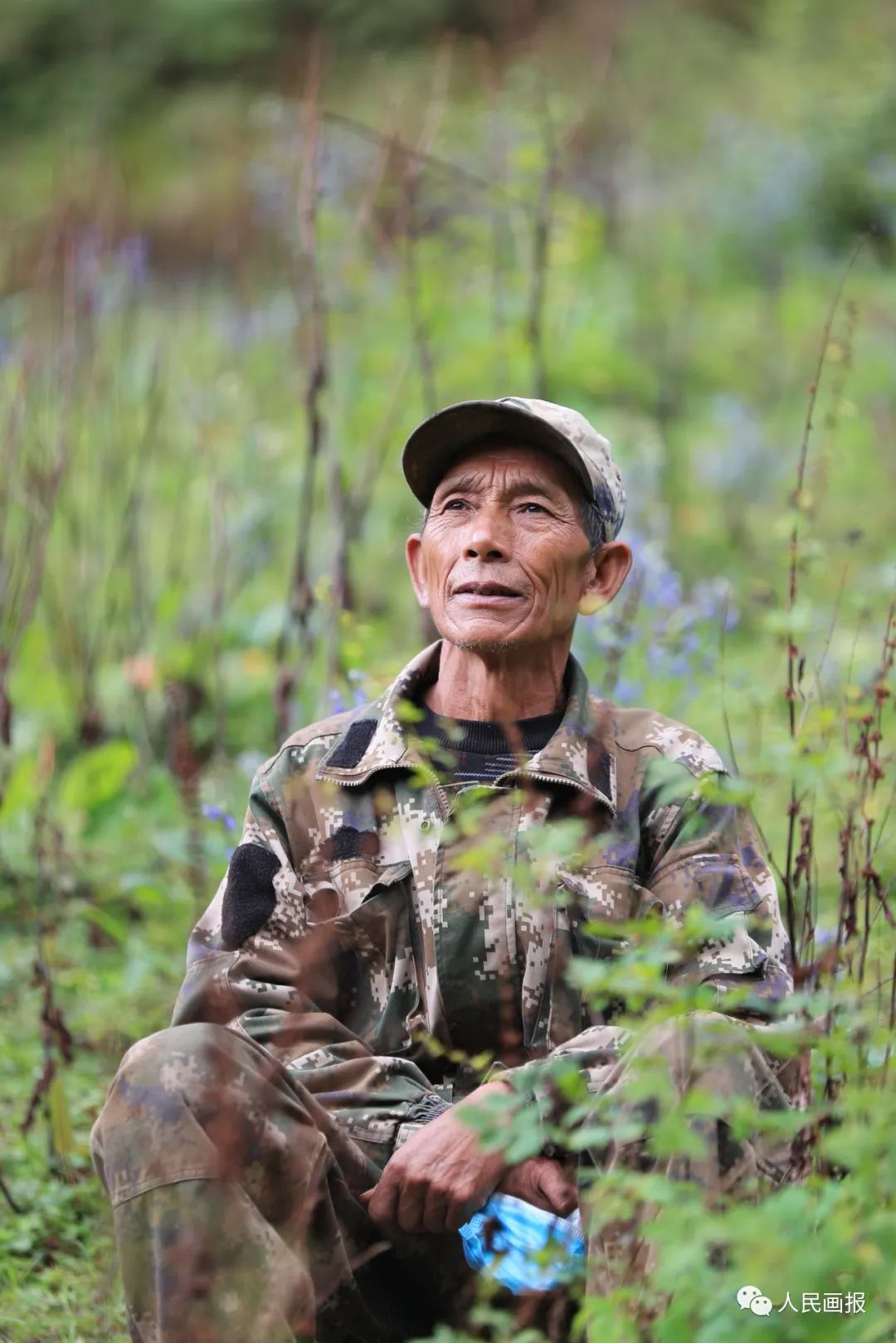
At the break of dawn, Yu Jianhua, a 72-year-old monkey protector, embarks on his daily journey.
II. Natural Landscape of Three Parallel Rivers -- Befriending the golden snub-nosed monkeys
The Baima Snow Mountain National Nature Reserve is situated in the heart of the “Three Parallel Rivers” World Natural Heritage Site, serving as the home to approximately 60 percent of Yunnan’s golden snub-nosed monkeys. Within this sanctuary, a team of forest rangers and scientific researchers act as the guardians of these enchanting creatures. Motivated by their deep affection for the golden snub-nosed monkeys, they embark on arduous journeys through snowy peaks and thick forests to ensure their well-being and preservation.
The golden snub-nosed monkey is a species found solely in China, specifically in the high-altitude alpine mountains above 3,000 meters at the intersection of Sichuan, Yunnan, and Xizang. Within the Baima Snow Mountain National Nature Reserve lies Xiangguqing Village, where over 60 golden snub-nosed monkeys reside in 10 “families.” This village offers a unique opportunity for people to observe these magnificent creatures up close.
Through spending time together every day, the rangers have forged a special connection with the monkeys. Only when the rangers issue their distinct call do the monkeys emerge from the depths of the dense forests, leaving visitors from near and far astounded by this incredible spectacle.
At the break of dawn, Yu Jianhua, a 72-year-old monkey protector, embarks on his daily journey. With his backpack slung over his shoulder, he ventures deep into the mountains in search of the elusive monkeys. Throughout the day, he dutifully shadows their movements, never returning home until nightfall.
“We rise before the monkeys and retire after them,” Yu said. The monkey protection team in his area is divided into two groups, each comprising 10 individuals who take turns safeguarding and providing for the monkeys. When tourists and researchers visit the area, the team guides them with utmost precision, ensuring they have the opportunity to witness the golden monkeys in all their glory.
Yu is a devoted monkey protector in the Xiangguqing area of the reserve. Since the establishment of the reserve in 1983, he has tirelessly dedicated himself to safeguarding the well-being of the monkeys. From 6:00 a.m. to 8:00 p.m. each day, Yu stands guard, accumulating an impressive 28 years of commitment to their protection.
“I miss the monkeys even if I don’t see them for just one day,” Yu remarked with a smile. Not just Yu, other staff members of the reserve all share a deep connection with them. He Xinming, the former director of the reserve’s Wildlife Rescue Station, even has bestowed unique names upon the monkeys from Ninth Brother to Rice Grain, White Face, and Red Dot.
The golden snub-nosed monkeys, renowned for their attractive “human-like face and red lips,” are granted first-grade State protection in China and are recognized as an endangered species on the International Union for Conservation of Nature (IUCN) Red List. Establishing a monkey protection team is among the key measures implemented by the reserve to safeguard these precious creatures.
In the Xiangguqing area, a traditional wooden cabin serves as a vital monitoring site for the golden snub-nosed monkeys. “Every movement of these monkeys can be observed from here,” shared Lai Jiandong, the director of the Wildlife Rescue Station at the reserve. He emphasized that the reserve is the largest national nature reserve in China dedicated to the preservation of golden snub-nosed monkeys. Since the establishment of a comprehensive protection network for these monkeys across Yunnan Province in 2019, the reserve has carried out a range of initiatives aimed at their conservation, including population monitoring, patrols, restoration of habitat corridors, community engagement, and nature education programs.
“In our management and protection efforts for the golden snub-nosed monkeys, we have adopted a range of advanced technologies, including infrared cameras, drones, and remote sensing. Moreover, we have developed ‘monkey face’ automatic identification and monitoring technology, enabling dynamic monitoring of the golden snub-nosed monkey populations,” explained Lai. He expressed gratitude for the collective efforts of various sectors in shaping the reserve into a true paradise for Yunnan’s golden snub-nosed monkeys.
Preliminary statistics reveal a remarkable growth in the golden snub-nosed monkey population within the reserve. From a mere seven populations and approximately 540 monkeys in 1985, the numbers have soared to 14 populations and an estimated 2,500 monkeys today. As a result, the reserve serves as the habitat for 65 percent of all golden snub-nosed monkeys found in China.
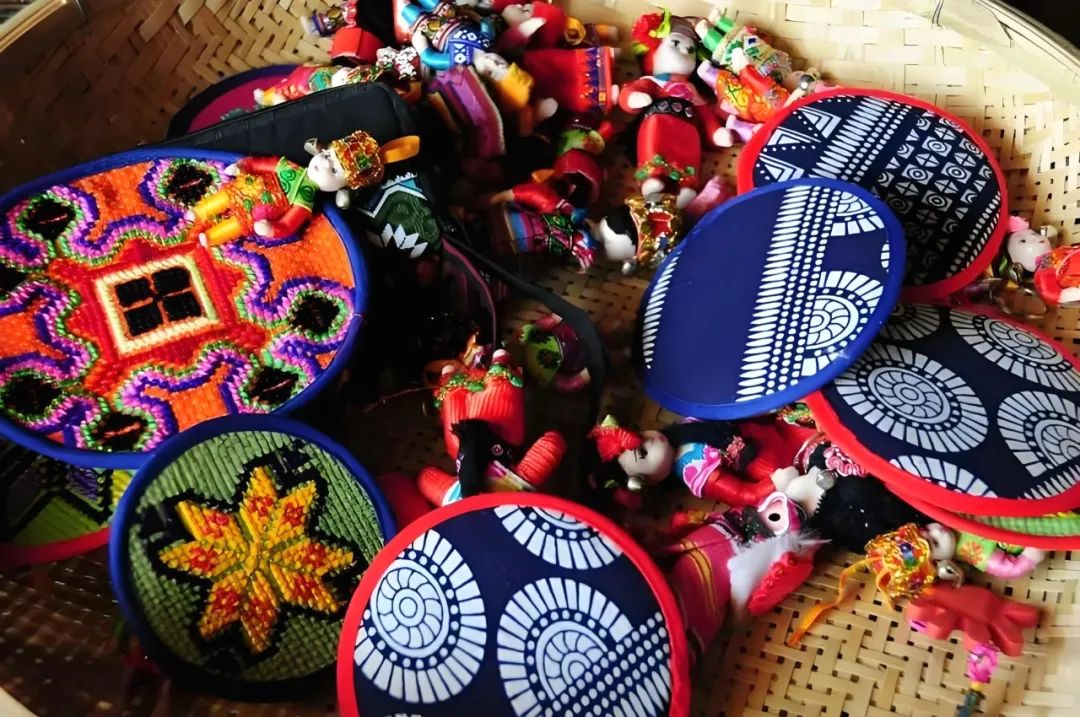
The intricate needlework comes from the picturesque Shilin Yi Autonomous County of Kunming, Yunnan.
III. Stone Forest -- Stories behind intricate needlework
The Stone Forest World Natural Heritage Site lies in the picturesque Shilin Yi Autonomous County of Kunming, Yunnan. This breathtaking destination showcases a quintessential karst landscape adorned with a multitude of stone peaks, clints, and caves. Adding to the allure of this remarkable region is the rich tradition of Yi (Sani) embroidery, a folk art widely embraced within the local Sani community. The integration of these two cultural treasures creates a distinctive and enchanting cultural identity for Shilin County.
Bi Yueying is a recognized national inheritor of the intangible cultural heritage of Yi embroidery in Shilin Yi Autonomous County, Kunming City, Yunnan Province. Adorned in hand-embroidered traditional Sani clothing and donning presbyopic glasses, she demonstrates her exceptional skill as she moistens the thread between her lips and deftly threads the needle.
It seems that embroidery skills come naturally to Sani women. With just a needle and threads in hand, they can embroider a wide array of subjects, spanning from the radiant sun to the serene moon, majestic mountains, flowing rivers, vibrant birds, graceful animals, delicate flowers, enchanting insects, and elusive fish. During her childhood, Bi would often observe her grandmother embroidering in the courtyard. Fascinated, Bi spent entire days absorbed in the craft, witnessing her grandmother’s skilled hands transform cloth into exquisite garments and belts. This ignited a profound passion for embroidery within Bi. At the age of 8, she eagerly sought guidance from her grandmother and mother, commencing her lifelong journey of mastering the art of embroidery. Since then, Bi has never relinquished her embroidery needle.
Embroidery is a meticulous and demanding craft, where even a single stitch must be executed flawlessly. Bi possesses an innate understanding of this art form, devoid of the need for a ruler or a pen. The intricate patterns reside solely within her mind. Six decades on, Bi has remained steadfast in her commitment to hand embroidery. She firmly believes that hand embroidery possesses a distinct essence that distinguishes it from machine embroidery. Machines lack the ability to infuse human emotions into the intricate stitches. To her, embroidery, crafted with a needle and threads, transcends being just an artwork; it becomes a medium for expressing human emotions. With her profound skill and passion, Bi has established a Yi embroidery studio within the Ashima tourist town. Here, she imparts her knowledge of embroidery to both local women and tourists, using her own strength to preserve and pass on the rich cultural heritage of Yi embroidery.
In present times, an increasing number of local women are embracing and dedicating themselves to the preservation of this traditional handicraft. Within the community of Ashima, folk embroidery artists skillfully weave tales of the Sani people through their meticulously crafted stitches. “My aspiration is to utilize Sani embroidery techniques in clothing, dowries, and jewelry, thereby promoting the invaluable cultural heritage we possess. I wish for the art of embroidery to flourish and evolve with the passing of time. I wish to infuse contemporary tastes into this timeless craft, ensuring that art comes alive,” said Bi, brimming with hope and anticipation for the future.
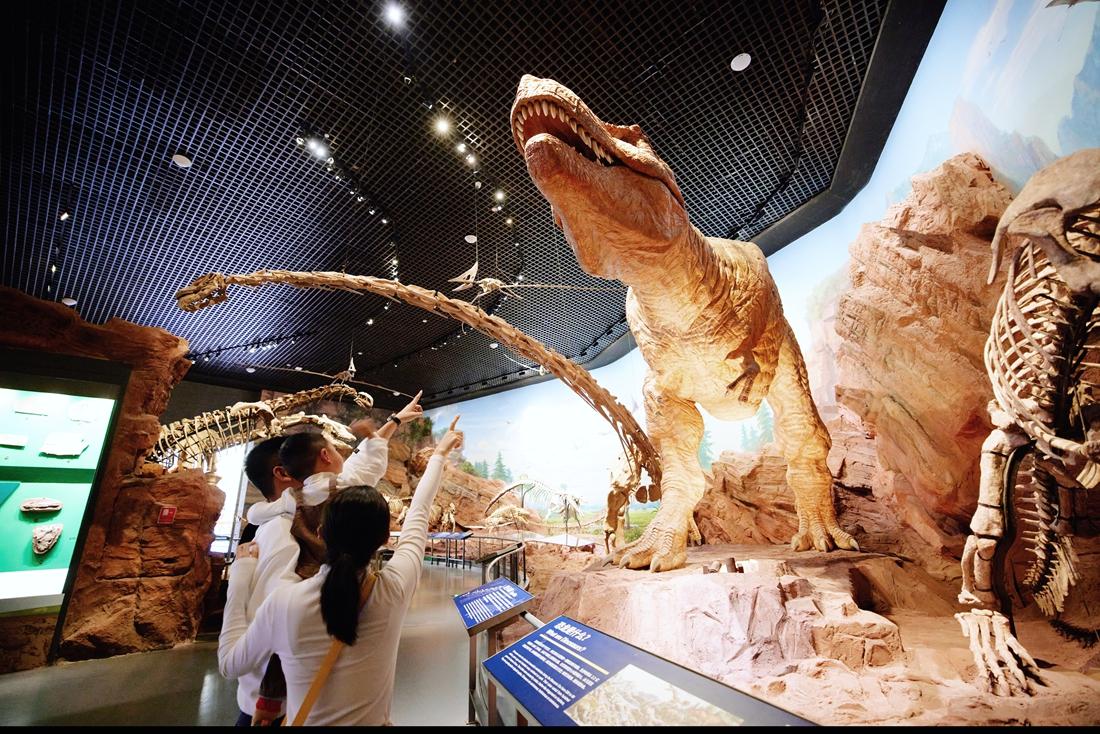
A family visit the Chengjiang Fossil Site Natural History Museum.
IV. Chengjiang Fossil Site -- Exploring the ancient past: A date with fossils
The fossilized animals in Chengjiang, dating back 530 million years, were unearthed in 1984. This fossil site has proven to be a treasure trove, as archaeologists have discovered fossils belonging to 16 phyla and over 200 species by 2012. The Chengjiang Fossil Site stands as one of the most awe-inspiring scientific findings of the twentieth century, according to the international paleontological community. At the Chengjiang Fossil Site Natural History Museum of Yunnan, Deputy Director Guo Jin has been dedicated to scientific research and conservation efforts pertaining to the Chengjiang fossils for an impressive 18 years.
At the Chengjiang Fossil Site, paleontologists have unearthed an extraordinary collection of fossils that date back over 500 million years. Each fossil discovered at this site serves as a captivating history book, preserving a record of our past, and Guo Jin is among the devoted guardians of these ancient treasures.
In 2005, Guo had his first encounter with Chengjiang fossils at the Paleontological Laboratory of Yunnan University. It was during this time that he was astounded by the incredible preservation of soft tissues found within a Chengjiang fossil. Since then, he has been captivated by the allure of Chengjiang fossils.
Throughout the years, Guo’s unwavering pursuit of fossils has led him to explore the field, conducting extensive research and curating teaching materials. He has made his presence ubiquitous at every corner of the Chengjiang Fossil Site Natural History Museum. In August 2020, after six years of preparations, the museum finally opened its doors to the public. Now, visitors have the opportunity to witness over 60,000 rare fossilized paleontological specimens, alongside living animal specimens from various corners of the globe.
Guo has devoted significant efforts to enhance public understanding of the Chengjiang Fossil Site and make knowledge more accessible within the museum. He actively participated in all aspects of museum construction, ensuring that each specimen displayed at the museum is accompanied by informative and easy-to-understand text, guiding visitors through the intricate details of early Cambrian paleontological evolution. As a result, the museum leads the country in both the quality and presentation of specimens.
Since its inauguration four years ago, the museum has welcomed over 2 million visitors from home and abroad. Witnessing the Chengjiang Fossil Site’s expanding influence fills Guo’s heart with joy. He holds steadfast to the words of Hou Xianguang, vice president of the International Palaeontological Association, who emphasized the importance of safeguarding these fossils while harnessing their potential for scientific research and public outreach.
Guo stresses the link between protecting natural heritage and the harmony of humanity and nature. He urges for a stronger focus on fossils, encouraging individuals to not only recognize their significance but also to engage in studying and exploring their profound insights. Guo believes that these endeavors will enable us to uncover our roots and shape a better future.

Che Zhixiong is a dedicated inheritor of the intangible cultural heritage of Hani polyphonic folk songs.
V. Honghe Hani Rice Terraces -- A guardian of the emerald rice fields
Hani polyphonic folk songs, rooted in the vibrant Hani rice terraces farming culture, encapsulate the essence of labor, harvest blessings, love, and reverence for nature. Through soulful singing, vibrant dance, and mesmerizing instrumentals, these songs vividly portray the daily lives of the Hani people. Meet Che Zhixiong, a dedicated inheritor of the intangible cultural heritage of Hani polyphonic folk songs, hailing from Qielongzhongzhai Village in Honghe County, Yunnan Province. For years, he has fervently pursued the living legacy of Hani culture, ensuring its enduring existence.
Che Zhixiong, a member of the Hani ethnic group, possesses striking features including big and bright eyes, a high and straight nose, and a sharp contrast between his dark skin and snow-white teeth. At the age of 19, he embarked on a systematic journey of learning the art of Hani polyphonic folk songs from his father. Since then, he has remained dedicated to his hometown, steadfastly marching on the path of preserving and inheriting this cherished musical tradition.
“Rather than perceiving the intangible cultural heritage as static, we must blend the essence of polyphonic folk songs with the present economic and cultural development needs, infusing them with a renewed significance,” emphasized Che. According to him, the responsibility of young inheritors from his generation extends beyond the traditional transmission of polyphonic folk songs. It also entails leveraging modern equipment to record, organize, and present these songs, allowing a wider audience to appreciate and understand the profound beauty of Hani polyphonic folk songs through innovative mediums.
In 2018, Che started to capture the essence of Hani villages, including their vibrant festivals, sacred ceremonies, rice terrace farming, and everyday life, using a video camera. “Through the lens, I document various facets of our daily studies, aiming to both preserve this valuable information and share it online, enabling a broader audience to appreciate the richness of polyphonic folk songs. It has greatly contributed to the development and preservation of our treasured cultural heritage,” Che explained.
During weekends, children in the village spend their entire day with Che, immersing themselves in the world of folk songs and traditional dance. They learn to sing and dance while also embracing the wonders of video recording, transforming their learning journey into a delightful adventure. Outside of holidays, around twenty children visit his home to learn polyphonic folk songs, and during winter and summer breaks, the number expands to over thirty children.
Che, a devoted guardian for the rice terraces, cultivates his own and neighboring farmers’ terraces while also preserving and cultivating the village’s 13 ancient varieties of red rice. This transforms Qielongzhongzhai Village into a model demonstration site, protecting the red rice germplasm resources and preserving the ecological integrity of the Hani rice terraces. With Che leading the way, over 10 households in the village have thrived through rural tourism.
Today, the Hani people remain steadfast guardians of the farming civilization handed down by their ancestors. As the rice-planting season arrives, the resounding melodies of Hani polyphonic folk songs ebb and flow amidst the rice terraces, evoking deep emotions in the hearts of all who hear them. In recognition of their cultural significance, the Hani polyphonic folk songs were rightfully included in the inaugural national intangible cultural heritage list in 2006.
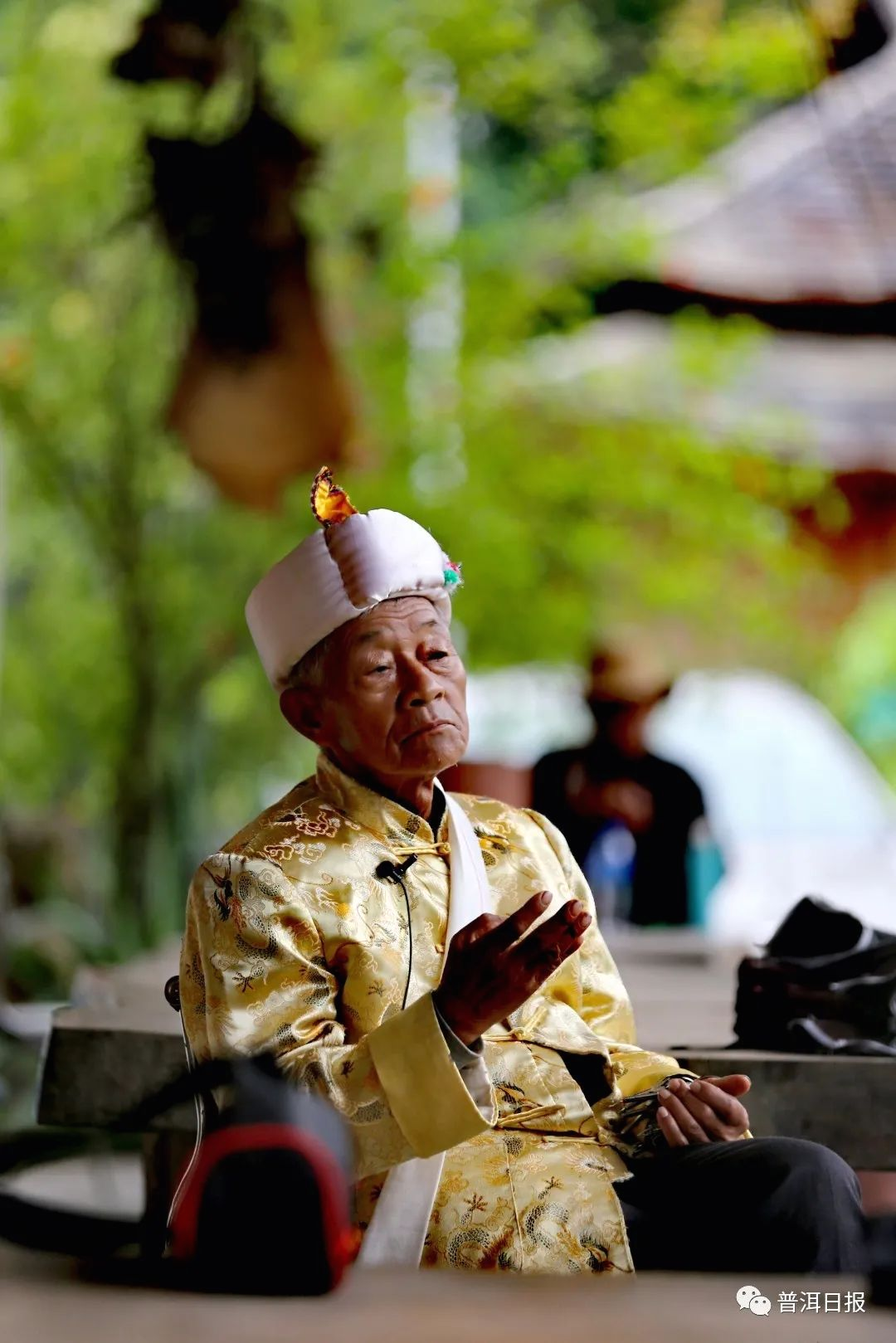
Su Guowen is an octogenarian protector of the ancient tea forest.
VI. Cultural Landscape of Old Tea Forests of the Jingmai Mountain in Pu’er -- We are custodians of the ancient tea forests
“Preserving tea trees is akin to safeguarding our vision.” The residents of Jingmai Mountain share an unbreakable bond with the mountain and, above all, with tea. The mountains foster lush forests, nurturing the growth of tea bushes that envelop the village. For centuries, the timeless tale of the interdependence between humans and tea unfolds in this sacred land.
Su Guowen: An octogenarian protector of the ancient tea forest
“Our goal is to foster a wider appreciation of our tea culture.” People of all ages, gathered in the cultural room of Mangjing Village, Lancang Lahu Autonomous County, Pu’er City, listen attentively to Su Guowen. In his eighties, Su, belonging to the Bulang ethnic group, imparts his wisdom through a live broadcast on loudspeakers, as his voice drifts into the ancient tea forest shrouded in clouds and mist. Having been a primary school teacher before retirement, Su returned to Jingmai Mountain to devote himself to the development of tea culture, becoming a revered custodian of Pu’er tea rituals and ancestral customs.
“We deeply appreciate and embrace tea as an integral part of our lives,” Su passionately shares insights into the rich tea culture and history of Jingmai Mountain. “Approximately during the 10th century B.C., the ancestors of the Bulang ethnic group migrated to Jingmai Mountain, finding refuge in the wild tea trees that saved them from an epidemic.”
Since then, the Bulang ethnic group, along with the Dai and other ethnic groups who have resided there for generations, have honed the art of cultivating tea amidst the forested landscape. They have embraced tea planting, tea making, tea appreciation, and tea preservation as an intrinsic part of their lives in Jingmai Mountain. “The legacy of ancient tea was bequeathed to us by our ancestors a millennium ago, and it is our responsibility to nurture these age-old tea plantations for the generations yet to come,” Su said.
Xianjin: A post-00 advocate of tea culture
In the ancient tea forest, a young Dai girl named Xianjin has established a live broadcasting setup. She skillfully brews a cup of freshly produced tea and leverages live streaming to sell her tea directly from the tea forest. In less than a year, she has closed an impressive 20,000 deals and generated over 800,000 yuan in sales revenue.
At first, Xianjin faced challenges on her entrepreneurial journey due to her limited knowledge about tea. When customers asked her, “What makes your tea special?”, she found herself unable to provide a satisfactory answer, despite being born and raised in the renowned tea region of Jingmai Mountain. Determined to improve her understanding of tea, she decided to leave Jingmai Mountain and work at a teahouse in Kunming. She eagerly seized any opportunity to visit tea mountains, immersing herself in the process of observing tea trees during the day and engaging in conversations with tea farmers to learn about tea plucking and production in the evenings. Throughout this period, Xianjin explored tea mountains of all sizes across Yunnan Province.
At the age of 18, armed with a deep knowledge of tea, Xianjin returned to her hometown from Kunming. She dedicated herself to transforming the ecological tea forest, aiming to enhance the quality of tea. Additionally, she established tea cooperatives to elevate the value of tea produced in the region. When she was 21, Xianjin embarked on the journey of selling tea through live streaming, utilizing the power of short videos to promote Jingmai Mountain. As the demand for her tea grew beyond the mountains, people from outside the region started flocking to Jingmai.
Standing inside the bamboo building and gazing at the tea mountain, Xianjin declared with determination, “This is where I belong. I’m determined to witness the flourishing of the ecological tea forest. Every blade of grass and every tree here is a legacy. It’s my duty to promote the culture and tea of Jingmai Mountain, cherished and safeguarded by my ancestors, and ensure that that they transcend boundaries.”
Text by our staff correspondents
Translated by YNTA