


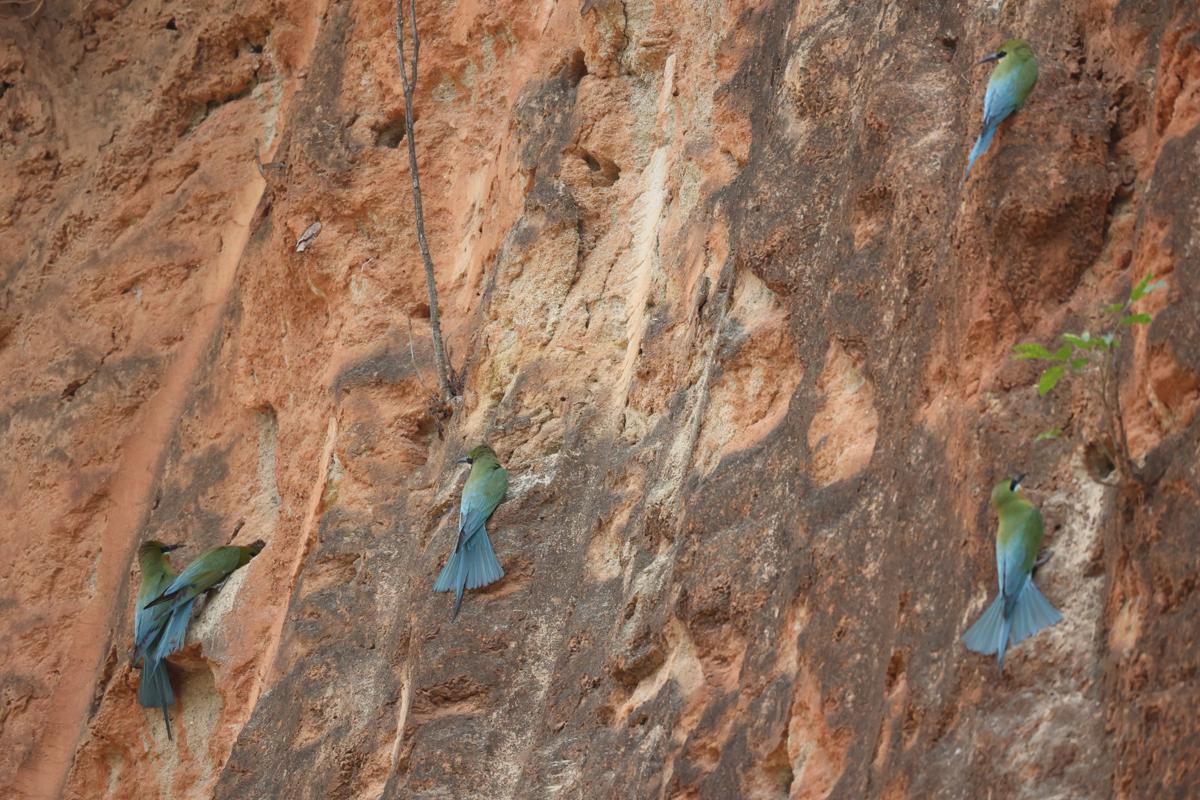
In late April, nearly 1,000 blue-tailed bee-eaters have returned as expected to the banks of the Nujiang River in Baoshan, Yunnan province, where they have begun excavating nests in the sandy cliffs to kick off a new breeding season.
The birds are hard at work, creating a scene reminiscent of a bustling construction site. They use their sharp, slender beaks to carve out new homes.
The species is renowned for its hovering skills. They beat their wings rapidly to hover in the air like helicopters, with a graceful and elegant poise.
Foraging is also their forte. A bee-eater lands gracefully on a dead branch, securely clutching a dragonfly in its beak, a testament to its prowess as a skilled hunter. Nearby, on a slender twig, two other bee-eaters perch and gently sway, embodying a sense of relaxed contentment after a meal.
The species, which is under second-class national protection, is a tropical bird with bright feathers. Every April, they migrate from Southeast Asia to southern China to breed, and then head south again in the fall to spend the winter.
According to local authorities, with improved conservation efforts and growing ecological awareness among villagers, more and more blue-tailed bee-eaters are settling along the Nujiang River, gradually unfolding a beautiful scene of harmonious coexistence between humans and nature.


