


What is behind Thai foreign minister’s visit to Myanmar?


Thai Deputy Prime Minister and Minister of Foreign Affairs Maris Sangiampongsa made an official visit to Myanmar from April 21 to 22, becoming the first ASEAN foreign minister to visit the country since the establishment of Myanmar’s new government.
The visit seeks to address border deadlock through pragmatic diplomacy, aiming to achieve synergy with Myanmar’s new government in border security, combating cross-border crime, resuming border trade, and promoting ASEAN cooperation.
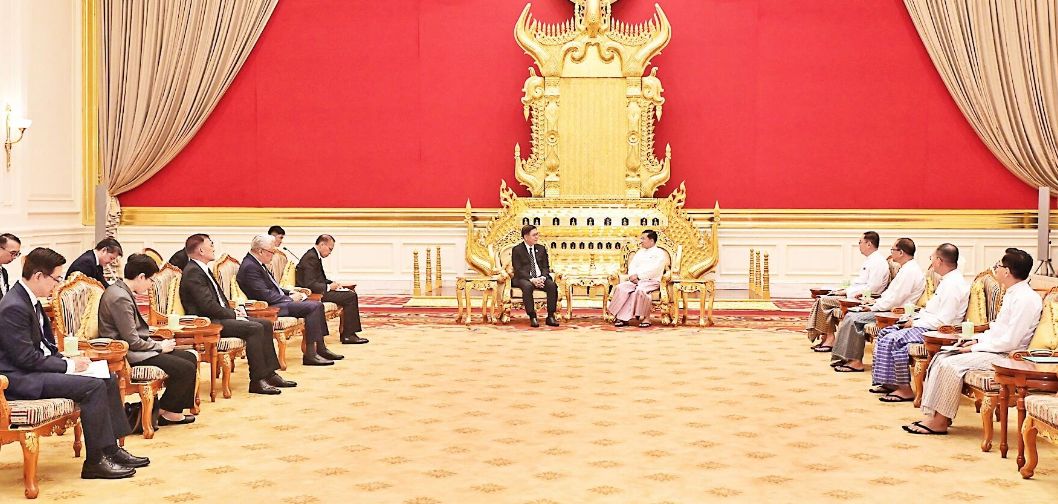
Thai Minister of Foreign Affairs Maris Sangiampongsa visits Myanmar from April 21 to 22.
Recognizing Myanmar’s new government
Since the 2021 coup, ASEAN has been deeply divided over how to engage with Myanmar’s military junta, with most member states doubting the legitimacy of Min Aung Hlaing’s administration.
Although Myanmar’s new government has gone through a formal transition from military to civilian rule via elections, its governing legitimacy has not been widely recognized internationally. It therefore urgently needs diplomatic engagement and interaction with neighboring countries to strengthen its governing mandate and expand international recognition.
While Thailand emphasizes that the visit is meant to congratulate the new government and strengthen bilateral cooperation, it objectively provides a degree of international recognition to Myanmar’s new government. Thailand’s approach is rooted in its longstanding tradition of pragmatic diplomacy, choosing to use “constructive engagement” in exchange for border security and bilateral benefits.
Managing conflict spillover
During his visit, Thai Foreign Minister Maris Sangiampongsa clearly conveyed concerns over border security, which encompass two dimensions.
First, the direct threat to Thai border areas from the continued spillover of internal conflict in Myanmar. The Thai foreign minister stressed the need for effective measures to prevent the conflict in Myanmar from affecting Thai territory, echoing earlier remarks by Thai Prime Minister Anutin Charnvirakul that “fighting on the Myanmar side must not spill over into Thailand,” reflecting Thailand’s deep anxiety over border conflict spillover. This security pressure has become a key driver behind Thailand’s diplomatic outreach.
Second, the growing influx of transnational crime, particularly telecom fraud, into Thailand. During talks, the Thai foreign minister expressed a desire to strengthen cooperation in combating transnational crime, focusing on criminal networks linked to forced labor and telecom fraud.
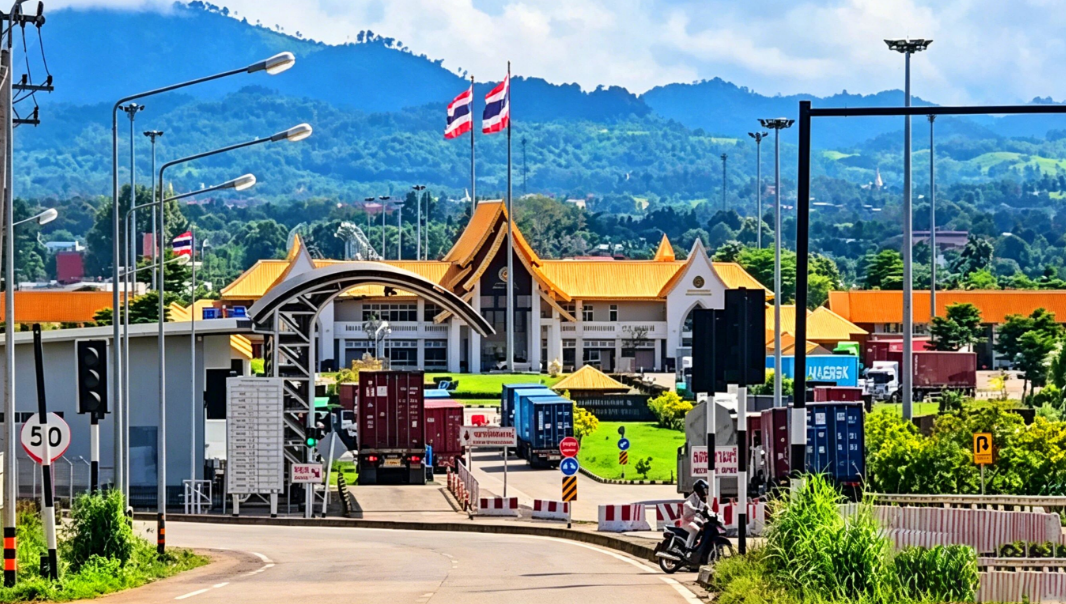
A Thai border gate to Myanmar
Restoring Thai-Myanmar border trade
Border trade accounts for 80% of total Thai-Myanmar trade. Prolonged border conflicts and telecom fraud issues have severely disrupted this trade.
Thailand previously cut off electricity and fuel supplies to five border points, including Myawaddy, and while this was intended to combat crime, it has also affected border exports and legitimate trade. Border security and border trade are not sequential priorities but dual objectives that must be advanced simultaneously.
If border trade is not restored while cross-border crime is being combated, border communities will be torn between two economic models: underground illegal economies will thrive in the shadows, while above-ground legitimate economies will continue to decline, leading to the “hollowing out” of the border economy.
Restoring border trade is fundamentally about providing an outlet for the legitimate economy, creating predictable benefits for border areas, and thus offering an alternative to illegal activities such as telecom fraud.
Facilitating Myanmar’s return to ASEAN
Since 2021, ASEAN has been mired in internal division due to the Myanmar military’s refusal to implement the “Five-Point Consensus,” with member states holding markedly different stances toward Myanmar. For Thailand, sharing a 2,400-kilometer border with Myanmar, the cost of cutting ties is far greater than any moral gain from maintaining diplomatic distance.
Core issues such as border stability, border trade, and cross-border crime control cannot be addressed without cooperation with Myanmar’s current government. In this context, Thailand has proactively offered to assist Myanmar in normalizing relations with ASEAN under the framework of the Five-Point Consensus.
In essence, this allows Thailand to justify its practical engagement with the Min Aung Hlaing administration—including reopening border trade and combating telecom fraud—outside the formal ASEAN framework, while responding to domestic and international criticism.
In other words, Thailand does not want to be seen as abandoning ASEAN’s collective stance, so it has cast itself as a “bridge,” finding a foothold between respecting the bloc’s principles and pursuing practical interests.
(The author Tao Mengting is a PhD candidate at the School of International Relations, Yunnan University.)
