


Min Aung Hlaing’s visit to India reveals realistic needs for both sides


At India’s invitation, Min Aung Hlaing, who swore in as the President of Myanmar in April, embarked on a five-day visit to India on May 30. Both sides aim to deepen cooperation in areas such as politics, economy, culture, and border management through this visit.
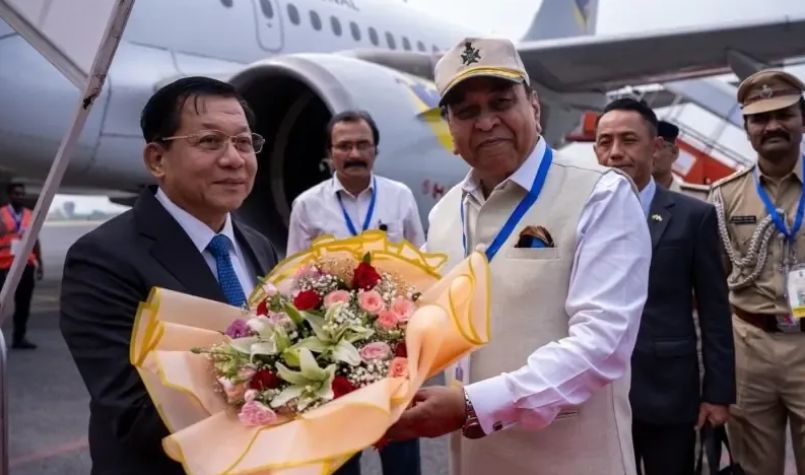
Min Aung Hlaing arrives in Uttar Pradesh, India, for visit.
As a member of ASEAN and a neighbor to both China and India, why did Min Aung Hlaing choose India instead of an ASEAN country or China for his first overseas visit? In fact, this visit is highlighting the mutually pragmatic needs of both Myanmar and India.
From Myanmar’s view, Min Aung Hlaing is attempting to demonstrate to the outside world that despite Western sanctions and criticism, Myanmar can still engage in normal exchanges with regional powers. By strengthening engagement and economic cooperation with India, he seeks to expand international recognition and room for maneuver.
Through this visit to India, Min Aung Hlaing hopes to break Myanmar’s diplomatic isolation, gain broader regional acceptance, restore normal diplomatic relations with ASEAN and other major neighboring countries, and set an example for his country’s foreign engagement.
From India’s perspective, the ruling coalition led by Prime Minister Narendra Modi has faced considerable difficulties in stabilizing its eastern states. In particular, violence has been going on in Manipur for nearly two years, resulting in hundreds of casualties. The situation in the state remains tense, with tribal clashes occurring.
Indian authorities believe that one reason for the continuing instability in Manipur is Myanmar’s lax border control, which has allowed criminals to cross the border and take refuge there. Stabilizing and developing relations with Myanmar will help India calm the situation in states like Manipur and lay the groundwork for the Bharatiya Janata Party’s long-term governance.
At the same time, developing relations with Myanmar is a key component of India’s "Act East" policy. India hopes that this visit will bring Myanmar within its strategic sphere of influence while balancing the influence of other major powers in the region.
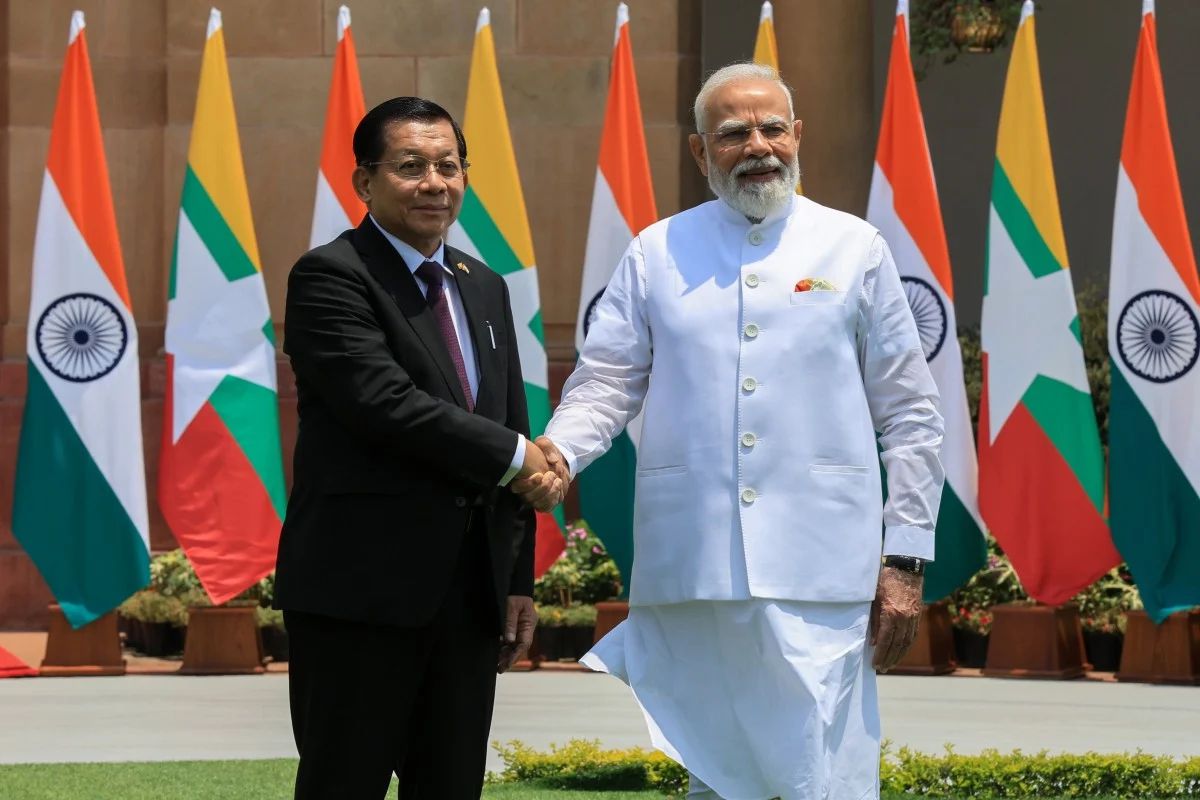
Indian Prime Minister of India Narendra Modi (right) shakes hands with Myanmar President Min Aung Hlaing before their meeting at Hyderabad House in New Delhi, India, on Monday (June 1). Photo: EPA
Regionally, if India promotes cooperation from practical security and economic perspectives—rather than purely endorsing Myanmar’s current regime—this visit may encourage more South and Southeast Asian countries to engage with Myanmar.
This visit is likely to intensify the competition between China and India in Myanmar. Given that Myanmar straddles the junction of South Asia and Southeast Asia and controls several key resource and transport corridors, both China and India hope to expand their influence there.
According to a Reuters report, the Myanmar government may shift toward balancing between India and China, rather than relying solely on one side for external support. This would give Myanmar’s leadership more bargaining space to secure infrastructure, energy, trade access, and diplomatic recognition from both China and India.
Source: WeChat and others; Trans-editing by Wang Shixue
