


China-Afghanistan-Pakistan meeting injects certainty into South Asia


From April 1 to 7, an informal trilateral meeting between China, Afghanistan, and Pakistan was held in Urumqi, Xinjiang. The informal meeting fostered an air of peace and cooperation, contributing to peace and stability in South Asia and bringing precious certainty to a world marked by growing uncertainty.
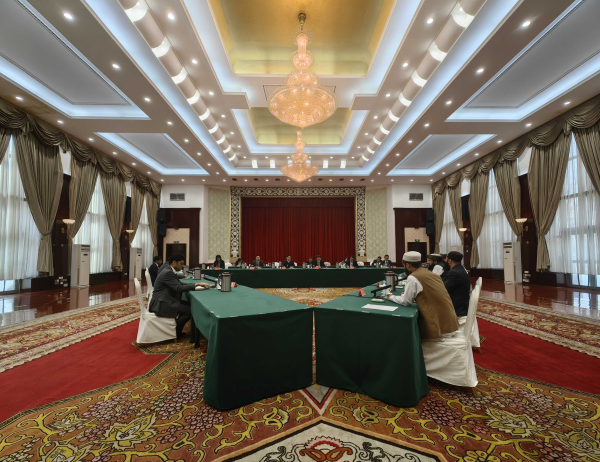
China-Afghanistan-Pakistan meeting in Urumqi, Xinjiang
Since February 2026, tensions between Afghanistan and Pakistan have once again increased, with border clashes escalating into an “open war.” In mid-March, with mediation from Muslim countries such as Saudi Arabia, Qatar, and Turkey, Afghanistan and Pakistan each announced a ceasefire during Eid al-Fitr. After the ceasefire period ended, the intensity of the conflict between the two countries has decreased, though clashes still occur from time to time.
Afghanistan and Pakistan are like “twin brothers,” sharing not only a long land border but also cross-border ethnic groups such as the Pashtuns, who live on both sides of the border. Beyond their deep ethnic and cultural ties, the two countries have also interacted closely in several major events since the 20th century.
During this trilateral meeting, the three sides agreed to explore a comprehensive solution to the issues in Afghanistan-Pakistan relations and identified the priority issues. China emphasized that terrorism is the core issue affecting Afghanistan-Pakistan relations. In short, the months-long conflict between the two countries is primarily driven by cross-border terrorism.
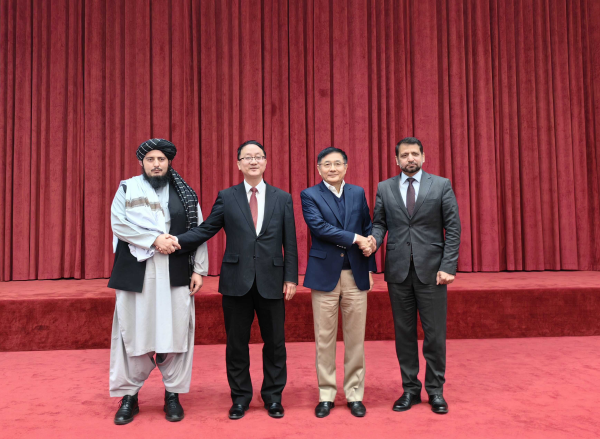
Attendees of the China-Afghanistan-Pakistan meeting shake hands in Urumqi, Xinjiang.
Terrorist organizations such as the Pakistani Taliban, using east Afghanistan as a base, have launched cross-border attacks on Pakistan, leading to a continued deterioration of Pakistan’s security situation. Previously, the Pakistani government and military have said repeatedly that the Pakistani Taliban has sanctuaries and freedom of movement in Afghanistan. Such attacks are unacceptable.”
The Afghan Taliban has refused to acknowledge the presence of foreign terrorists within its borders. However, reports from the UN Security Council and many countries, including Russia and Central Asian nations, indicate that Al-Qaeda still maintains training camps and other facilities in Afghanistan. The issue of terrorism within Afghanistan has become a major concern and even a threat to regional countries and the international community at large, requiring serious attention and effective response.
China will continue to uphold the Global Security Initiative and the Asian security model. By providing fair mediation and a dialogue platform, it will play a constructive role in improving Afghanistan-Pakistan relations and enhancing China-Afghanistan-Pakistan cooperation. As ancient Eastern civilizations sharing similar cultural identities, the three countries all see “peace as the most precious.” Continued trilateral meetings will undoubtedly promote ceasefires and maintain regional peace and stability.
(The author Wang Shida is a research fellow at the South Asia Institute, China Institutes of Contemporary International Relations.)
