


Super License: A reform Thailand cannot afford to lose


In April, Thailand's newly appointed Prime Minister Anutin Charnvirakul led his new Cabinet to take the oath of office. He immediately outlined in his policy agenda a clear commitment to reform the business development system within the year.
The core measure is to implement the "Super License" system within 180 days, and the reform is aimed at integrating government services through digitalization, systematically reducing bureaucracy, reshaping Thai business environment and increasing administrative efficiency.
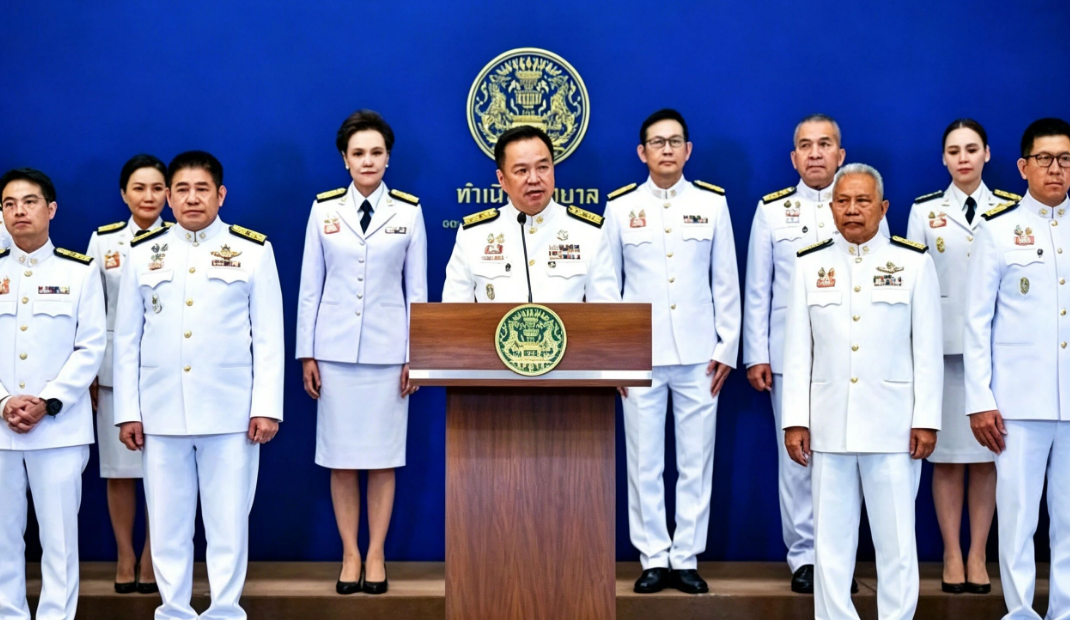
Thai Prime Minister Anutin Charnvirakul leads his new Cabinet to take the oath of office.
Thailand has long relied on tourism, agriculture, and manufacturing to drive economic growth. However, low administrative efficiency, fragmented approval processes, and outdated regulations have become prominent shortcomings hindering development. These weaknesses have become increasingly evident amid the current wave of digital transformation.
The legal name of the "Super License" is the Draft Act on Facilitation in the Consideration of Licenses and Provision of Services to the Public. According to a detailed analysis released by the Thai legal research firm The Legal Co., Ltd., this act represents a comprehensive revision and expansion of the 2015 Act on Facilitation of Licensing by Government Agencies. The act includes the following groundbreaking provisions:
First, the "Master Permit" mechanism. The Cabinet can designate economic activities requiring multiple approvals as master permits. Once a master permit is issued, all ancillary permits associated with that economic activity automatically take effect, meaning investors no longer need to shuttle repeatedly between different agencies.
Second, the "One-Stop" service. The act requires the establishment of a unified physical and electronic center where applicants can submit documents, check progress, and pay fees. Upon receiving an application, the national business center must forward it to the relevant departments within one working day.
Third, extension of validity periods. The act stipulates that permits will have indefinite validity or at least five-year terms, replacing the previous practice of frequent short-term renewals.

A view of urban Thailand
Thus, the "Super License" is not merely a simplification of individual permits but a systemic institutional reconstruction supported by digital technology, centered on process reengineering and based on the rule of law. Its core goal is to reduce the need for businesses to run errands, enable data to flow faster, and eliminate approval bottlenecks.
Although the "Super License" reform is well-directed and clear in its objectives, its implementation still faces challenges within Thailand's political and administrative reality. These include resistance from parliament, departmental interest barriers, technological capacity shortcomings, and lagging legal supporting measures.
Nonetheless, Anutin's "Super License" reform is akin to a high-stakes political gamble. He is betting on his own governing ability, the cooperation of the bureaucratic system, and the trust of the market and the public.
Given that Thailand's bureaucracy is deeply entrenched, the bureaucratic deficiencies cannot be cured overnight by a "Super License" alone. While Anutin may not necessarily win this gamble, he cannot afford to walk away from the bet.
The global supply chain is restructuring, and regional competition is intensifying. If Thailand fails to truly break down chronic bureaucratic ailments and improve its business environment, it will hardly attract high-quality investment, continue to miss development opportunities, and could even be left far behind by neighboring countries.
The reform will not only define the performance of the Anutin government but also affect Thailand's development trajectory over the next ten years.
(The author Yu Haiqiu is a research fellow at the Thailand Research Institute, Yunnan Academy of Social Sciences.)
