


Nepal begins new tune with Balen's song Jaya Mahakali


After the landslide victory of the Rastriya Swatantra Party (RSP) in the election, people of Nepal, even the media, were talking about the process of the Prime Minister's appointment.
I was watching a random music video on my laptop, and I found the song 'Jaya Mahakali', and my eyes just stopped for a moment. My ears were filled with a voice that sounded like a roar. This happened on the evening of March 26, 2026, one night before Balen Shah became the Prime Minister of Nepal.
He released the music video called 'Jai Mahakali, Aayo Gorkhali' that evening, surprisingly. The video is three minutes and forty-one seconds long. It combines Balen’s raw rap vocals with footage from his election campaign around the country and crowds of people on the streets. I also noticed that scenes of Nepal’s hills and plains, the Nepali flag, and powerful symbols of Goddess Mahakali, which were beyond the imagination of the Nepali people that evening. The song was released suddenly. It starts with an energetic catchphrase: "Jai Mahakali, Aayo Gorkhali." This part gives the listener a lot of energy.
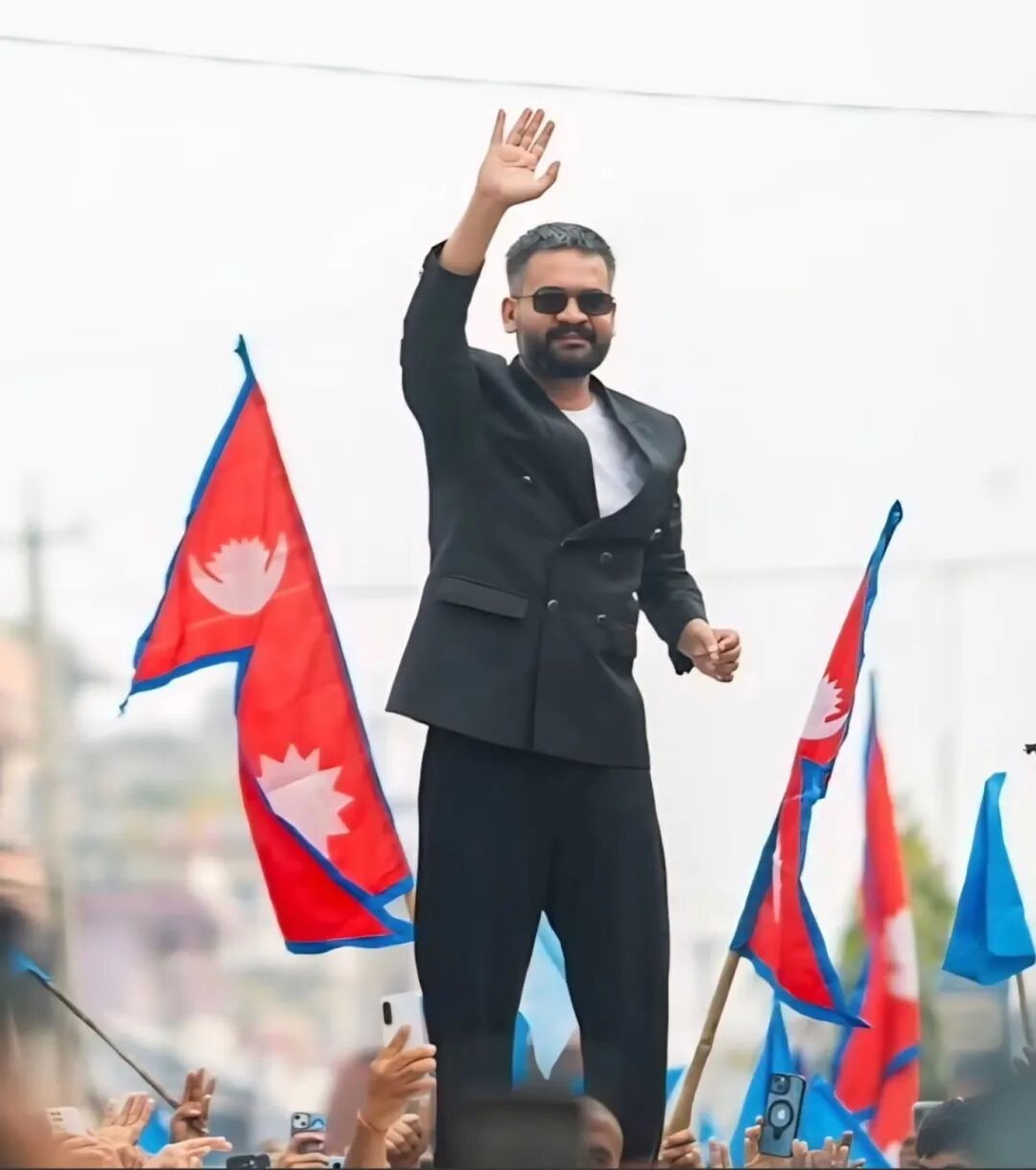
Balen Shah waves to his supporters at an election campaign.
A song full of political message
The video contains many political messages. If you went through the song and video contents, it shows that Balen Shah is very serious about changing Nepal’s political system. Like Mahakali, who destroys demons to bring peace, Balen wants to get rid of corruption and disorder to build a new Nepal. Young people are chanting "Balen! Balen!" RSP's flag is waving, and the bell, an election symbol of RSP, is shaking more and more. There are clips of his victory over the veteran leader, who was the immediate past Prime Minister of Nepal, Mr. KP Sharma Oli. It has tried to show that this is not about one person or one party winning; it is about the people taking back their country into their own hands, mostly the youth.
After the video was released, it quickly got millions of views on YouTube. People were commenting on the media, saying things like "This song gives me goosebumps" and "My hair stands on end when I hear it."
At its core, the song is about unity, courage, and change. Some of the lyrics are 'My heart is full of courage, my blood is boiling,' 'This time I will make my mother Nepal proud,' and 'I will break foreign soil together.' The imagery in the song is also very powerful. 'My chest is like the Terai (plain land of south part of Nepal), my forehead is cold like Mount Everest.' This line brings together Nepal’s geography and culture. The song ends with the idea that "A united Nepali is making history this time, ' which inspires the generation.
The song 'Jai Mahakali' begins with a repetitive phrase: 'Jai Mahakali, Jai Mahakali, Jai Mahakali Aayo Gorkhali'. This means 'Victory to Mahakali, Victory to Mahakali, Victory to Mahakali. The Gorkhali is here. This sets the tone for the song, which is about being aggressive and spiritual and loving one's own country. It is about Goddess Mahakali, who is the Hindu goddess of power and getting rid of evil. The song also talks about the Gorkhali warrior spirit. The Nepalese army is called the Gorkha. The Shah dynasty originated from the Gorkha district of Nepal, so the Gorkha regiment, Nepali who are allowed to admit in UK army as the Gorkha Army. Gorkhali means a bravo here in song.
The song speaks 'Jai Mahakali Aayo Gorkhali' again and again. It says that the people of Nepal will make the country prosperous and happy like a harvest. This shows that the song is about being brave and wanting to make the country proud.
The first part of the song is full of courage and love for one's own country. The singer Balen says he has a lot of bravery in his heart, and he wants to me country beautiful. He wants to make Nepal happy. He wants to work hard for it. He says he is strong like a tree from the forest, and he will not give up easily. He asks for the blessings of Mahakali to help him. The song repeats the message again, which is about being fearless and making the country prosperous.
The second part of the song has stronger imagery. Balen sings the song with his heart as big as the Terai plains, and his forehead is cool like Mount Everest. He says he is strong and he will fight for his country. He will not give up. He will make sure the country is recognized all over the world one day. He says he will break through obstacles like a spider's web, and he will show the world that Nepal is different. He warns his enemies not to come, or they will get hurt. He says he will bring change to the country, and he will make it proud.
The song ends with energy and a hopeful message: 'The flag will one day fly all over the world... Jai Nepal.
The song 'Jai Mahakali' mostly talks about Hindu spiritual power, Gorkhali warrior bravery, love for Nepal, and the desire for change and unity. The singer and the Nepali people are unstoppable, and they will make the country proud and prosperous. The song is both a battle cry and an inspirational anthem. Actually, this song was originally written seven years ago, but it was remade and released right before Balen became Prime Minister. Now it is like the soundtrack of his leadership style.
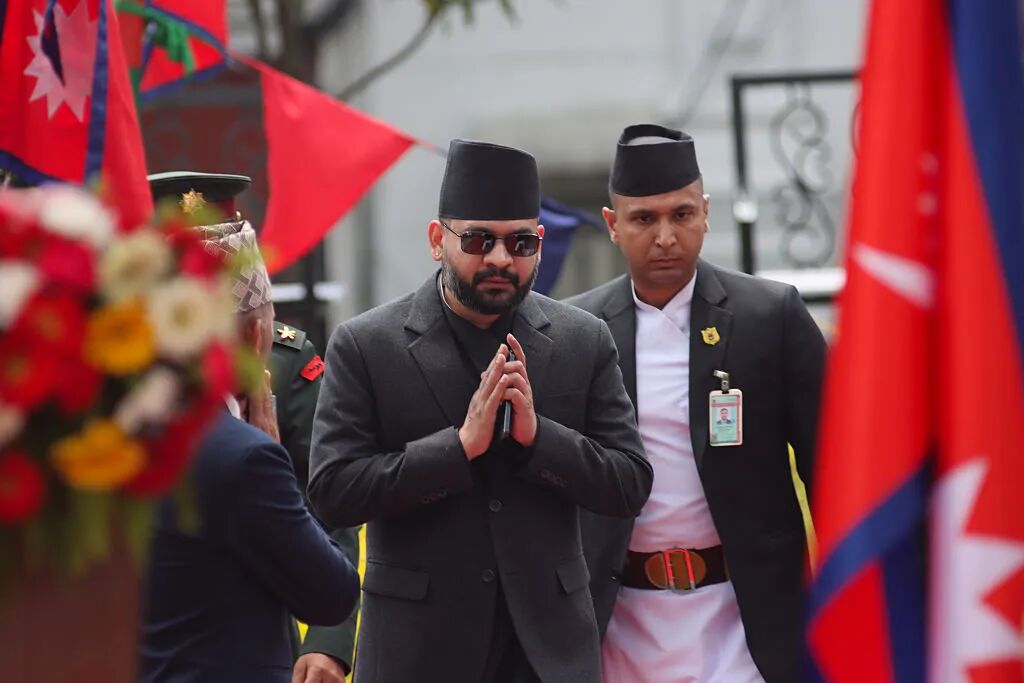
Balen Shah shows up at the swearing-in ceremony as the 43rd Prime Minister of Nepal.
Growth of Balen Shah as rapper, politician
To know Balen Shah, need to look at his background. His full name is Balendra Shah. People call him Balen, and he wishes. He was born on April 27, 1990, in Naradevi, Kathmandu. He is currently 36 years old. His family is from the Mahottari district of Madhesh Province of Nepal. He grew up in Kathmandu. Born in a Hindu family, he learned Newari and Buddhist culture in Kathmandu. He has married a model and has a daughter.
Balen completed his schooling and completed a degree in Civil Engineering from Kathmandu. Later, he got a Master’s degree in Structural Engineering from Visvesvaraya Technological University in Karnataka, India. Professionally, he is an engineer.
After the devastating earthquake in 2015 in Nepal, Balen played a significant role in rebuilding. He worked with the National Society for Earthquake Technology to assess the damage. He also worked as a bridge engineer and a technical advisor for some organizations. During the COVID-19 pandemic, his engineering skills helped a lot of people. His practical approach as an engineer has always defined him.
Balen’s journey as a rapper is also very interesting. He loved music and poetry from an early age. When he was in grade school, he wrote a song called 'Sadak Balak' (Street Child), which was released in 2012. The song was about the struggles of street children and the social issues they faced. He then became active in the Nepali hip-hop scene, particularly through "Raw Barz" rap battles on YouTube. He gained respect for his lyrics and won recognition in the battle circuit. His lyrics often talked about corruption, inequality, and government failures. He built an image as a thoughtful rapper with fans across Nepal and abroad. Even after he entered politics, his passion for music never faded. Releasing the remade "Jai Mahakali" right before he became Prime Minister shows that the artist in him is still alive.
Balen’s rise in politics feels like a movie story. It is real. In the 2022 elections, he ran as an independent candidate with the symbol of a stick in an election and became the Mayor of Kathmandu Metropolitan City, making a surprise to the established political parties and even to the media/experts. He did not do rallies; instead, he used podcasts, social media, and direct public engagement at that time. This victory started a wave of independent and youth-centric politics in Nepal. Being the mayor of Kathmandu, he was in the media headlines most ot the time, even though he used to speak very little, as he is doing the same after being the prime minister.
His time as Mayor lasted three and a half years. He earned the nickname "The Dozer" for his actions. Demolishing illegal buildings, widening roads, preserving heritage sites, and improving sanitation. He viewed city problems as defects that needed fixing, not as political issues. He mobilized the police to manage street selling and squatter settlements. While some people criticized these moves as harsh, many praised them as governance. During his time, Kathmandu started to look different in many ways. Cleaner streets, managed public spaces, and more transparency in working modality, though his work for garbage management and chasing street people who used to sell on a small scale were in media headlines.
In 2026, he resigned as Mayor to take a senior leader role in the RSP. In the elections, he contested from Jhapa district constituency-5 and defeated veteran leader K.P. Sharma Oli. The RSP won a landslide, securing around two-thirds of the seats. Balen was elected parliamentary party leader. On March 27, 2026, he was sworn in as the 43rd Prime Minister of Nepal.
The swearing-in ceremony was unique and culturally rich. Conch shells were blown, 108 Brahmins chanted Swasti, and over 108 Buddhist monks recited the Ashtamangal path. Hindu Batuk and Buddhist monks recited prayers. At 36 years old, Balen became Nepal’s Prime Minister in recent history. His cabinet initially had 15 ministers.
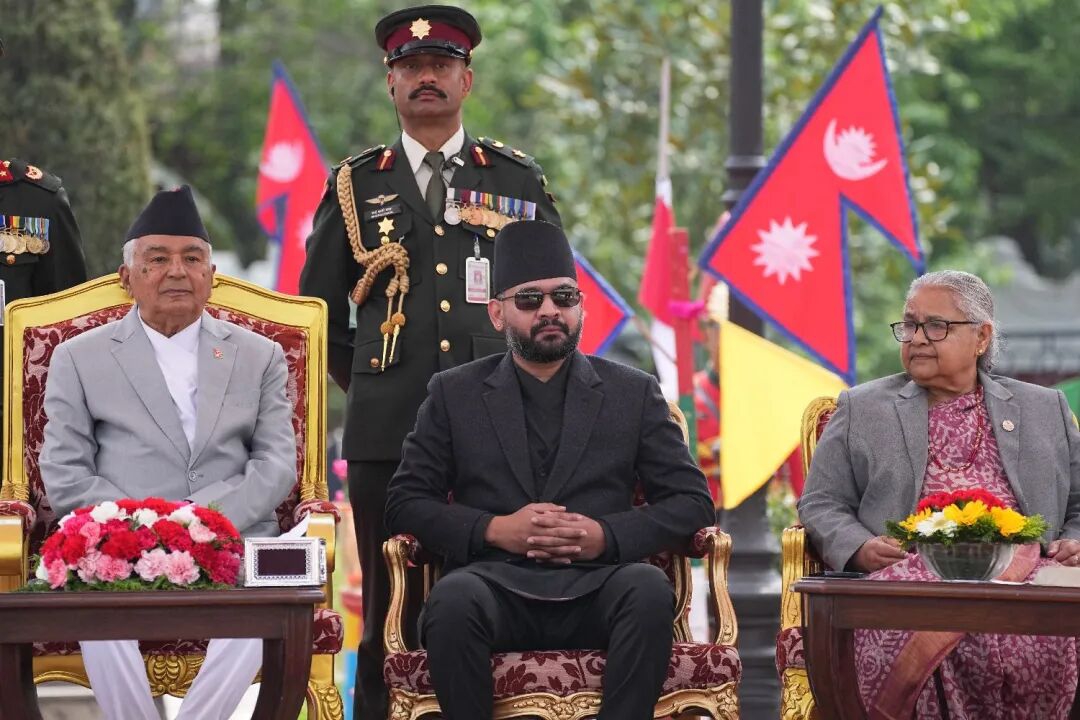
Balen Shah shows up at the swearing-in ceremony.
Advantage & challenges ahead of the new PM
After taking the oath, he broke traditions. He did not wear garlands or deliver a formal speech. Instead, he got straight to work. This reflects his style. People of Nepal are surprisingly seeing him and guessing that actions speak louder than words.
Public opinion among young people is very positive towards him. Photos of Balen are commonly seen on buses. Young people say, 'Balen will bring meritocracy. Now degrees, skills, and honesty will matter in politics.' Listening to 'Jai Mahakali' makes many people emotional. They believe Balen can write history, not just read it. He has given hope to people who wanted to migrate abroad, encouraging them to build something in Nepal, which has a 26.23 percent GDP on remittance, and stands in the 4th position in the world in terms of receiving remittance. His popularity in the media is huge.
However, there is also criticism. Some people call his style 'aggressive'. Say that his past social media posts were diplomatically immature. During his time as Mayor, actions against street vendors and squatters drew accusations of 'oppression.' He faced a court case over a comment, which he had to attend after becoming Prime Minister. Some people argue that 'you cannot run a country with rap style aggression.' There are questions about whether his fiery energy will help maintain relations with India and China.
Balen Shah represents Nepal’s 'post-ideological' young leader. He is not a Marxist or a traditional democrat. He is an engineer-rapper who sees the state as a structure that needs repair and rebuilding. The song "Jai Mahakali" perfectly mirrors this philosophy. Destroying the old to create something new.
His chances of success look promising because he has support among young people and a solid popular mandate. The RSP’s near two-thirds majority should make policy implementation smoother. His experience in earthquake reconstruction, successful mayoral innovations, and engineering mindset can accelerate development projects. His approach and firm stance on borders can strengthen pride.
However, significant challenges remain. He has limited experience in parliamentary politics. He must ensure coordination within the cabinet and parliament. Maintaining balance between India and China will require nuance, beyond fight rhetoric. A 'dozer' can easily demolish the old. Building a durable new structure demands patience, inclusiveness, and long-term vision. Ongoing court cases and past controversies may also distract attention.
The song ends with lines: 'One day the flag will flutter across the world… Jai Nepal!' To appreciate this dream, Balen must govern in the spirit of the song. Emphasizing unity, courage, anti-corruption drive, and empowering the youth.
Hopefully, Mahakali is giving her blessings to Singha Durbar now. Youths from Nepal are cheering in the streets. Speakers are playing the song 'Jai Mahakali, Aayo Gorkhali'.
If Balen can keep this energy going and do what he says he will do, Nepal will really become a developed country. This means that there will be no corruption. The young people want to stay in Nepal rather than go somewhere else. The Gorkhali will be known for being brave against all, around the world. People are saying Jai Mahakali, Aayo Gorkhali in the current time in Nepal with hopeful eyes. If he succeeds in matching his words with action, then this song may be remembered not just as campaign music, but as the anthem that introduced a new political era in Nepal.
(The writer Shreedhar Neupane is the editor-in-chief of Paluwa News Network, Nepal.)
