


Will China-Vietnam ties reach new height via To Lam’s visit?


From April 14 to 17, General Secretary of the Communist Party of Vietnam Central Committee and President of Vietnam To Lam, along with his wife and a high-ranking Vietnamese delegation, will pay a state visit to China. This is a significant visit to China by a Southeast Asian leader so far this year, and it is also To Lam's first overseas trip since being newly elected as Vietnamese President.
Impact of the collapsed US-Iran talks
A crucial yet easily overlooked backdrop to To Lam's visit to China is the breakdown of direct negotiations between the United States and Iran. Just before To Lam and his delegation departed, the US-Iran talks on a ceasefire, which had been held in Pakistan, collapsed after 21 hours of negotiations. Considering energy security, Vietnam's top leadership is highly concerned about the outcome of these negotiations, as this outcome will also subtly affect To Lam's trip to China and, more importantly, the trajectory of Sino-Vietnamese relations.
Since late March of this year, military strikes launched by the United States and Israel against Iran have effectively shut down navigation through the Strait of Hormuz, plunging Southeast Asian countries into an unprecedented energy crisis. Many gas stations in Vietnam had to impose purchase restrictions. Faced with this sudden predicament, the Chinese government urgently shipped 100,000 barrels of distillate fuel to Vietnam, providing immediate relief.
In contrast, the United States currently pursues a highly pragmatic foreign policy, scaling back actual support provided to allied nations or international organizations, and Washington has engaged in acts of withdrawing from agreements. Therefore, it is unrealistic to expect the US to offer timely assistance when it is truly needed.
With the collapse of the first round of direct US-Iran negotiations, uncertainty surrounding the Strait of Hormuz has risen again. Effectively cooperating to overcome the energy predicament has become a top priority for Vietnam's decision-makers. Vietnam is a major processing nation. For Vietnam, "no energy" almost equates to "no means of survival."
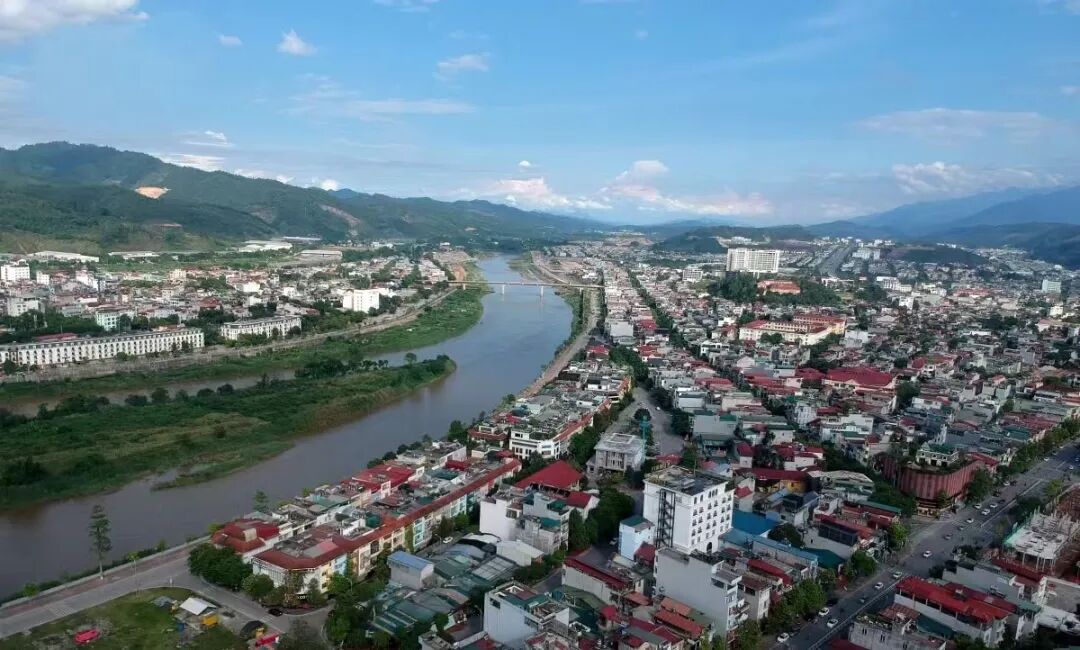
A border area between China and Vietnam
A pragmatic visit by To Lam
To Lam's visit will focus on upgrading bilateral relations, aligning development strategies, and coordinating on international and regional issues. It will be a highly pragmatic visit.
First, the deep integration of the two countries' industries. The economic and trade complementarity between China and Vietnam is second to none in Southeast Asia, but this is far from sufficient. Facing the impact of new industries brought about by the Fourth Industrial Revolution, there is still much room for cooperation between China and Vietnam in fields such as artificial intelligence, semiconductors, robotics, and 5G. Only through deep integration can they jointly enlarge the industrial pie.
Second, expanding new growth models for both countries. Currently, Vietnam is seeking to change its development path, moving away from traditional processing, aligning with global technological pace, and achieving more technology-led growth. Key areas include clean energy, smart city construction, and smart port development. These undoubtedly represent new growth models for both countries and are also opportunities for cooperation.
Third, addressing the energy predicament through cooperation in the new energy sector. China and Vietnam have long cooperated in the energy sector, including cross-border power transmission. However, against the new backdrop of the energy crisis in the Middle East, higher demands are placed on bilateral cooperation in the new energy field. How to enhance the resilience of energy supply should be a common concern for China and Vietnam.
Fourth, benefiting the people of both countries through infrastructure connectivity. On March 19 this year, General Secretary To Lam visited the Dong Dang Railway Station in Lang Son province on the China-Vietnam border. He emphasized that a railway line connecting Vietnam and China would "reduce logistics costs, shorten transportation time, and enhance economic competitiveness." Besides cross-border railways, Vietnam's domestic railway network is also being stepped up in planning.
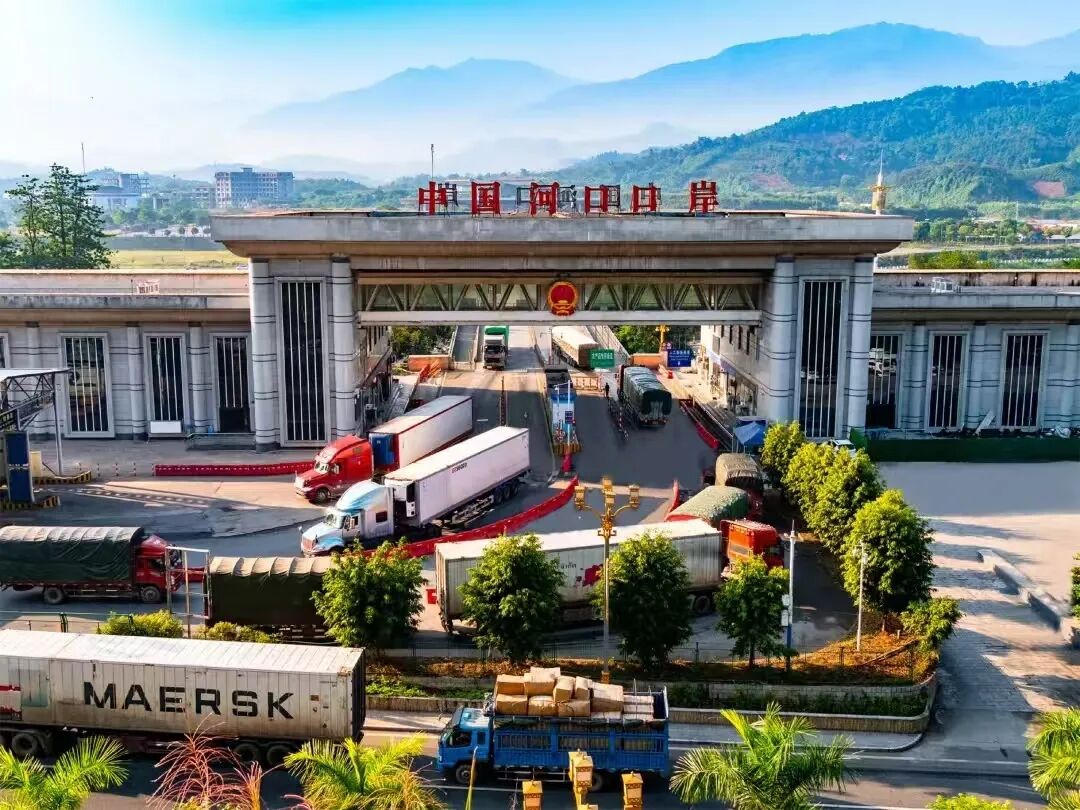
Hekou gate stands near the China-Vietnam border section in south Yunnan.
Can Vietnam take a key step in high-speed rail?
Vietnam has a long, narrow territory and lacks a high-speed rail link between the north and south. High-speed rail seems to be a persistent pain for the Vietnamese people. Why? One reason is the indecision in choosing a cooperation partner. Speaking of "cooperation partners," many people wonder why Vietnam would not choose China's high-speed rail technology, which is closer and proven, but instead prefers to look farther afield for other countries' options.
China's high-speed rail is cost-effective, safe, and reliable. However, some segments within Vietnam still harbor certain doubts about cooperating with China. If there are more options available for cooperation in building high-speed rail, Vietnam would not prioritize Chinese technology, even though other countries' high-speed rail technologies might be slightly more expensive.
Conversely, if other partners quote prices that are too high, leaving Vietnam with no viable alternatives, Vietnam might eventually have no choice but to adopt Chinese high-speed rail technology. After all, the successful operation of the China-Laos high-speed railway and Indonesia's Jakarta-Bandung high-speed railway has demonstrated the cooperative dividends, providing some reference for Vietnam. Of course, even in a scenario where there is "no other choice," Vietnam would likely impose numerous stringent conditions.
So, can China and Vietnam take a key step forward in high-speed rail construction cooperation? The answer to this question will become clearer when the outcomes of To Lam's visit to China are released. Ultimately, the deepening of pragmatic cooperation between China and Vietnam will be the core driving force for the mutual development of both sides.
(The author Cheng Hanping is a professor and doctoral mentor at the ASEAN Studies Center, Zhejiang University of Technology.)
