


Is India losing its neighbors or winning them?


On May 11, the newly elected state government (BJP government) in West Bengal, India, announced that it would transfer land to the Indian Border Security Force (BSF) within 45 days for the construction of a fence along the India-Bangladesh border. Bangladesh quickly responded, saying it "fears no barbed wire" and called on India to handle border issues in a humane manner.
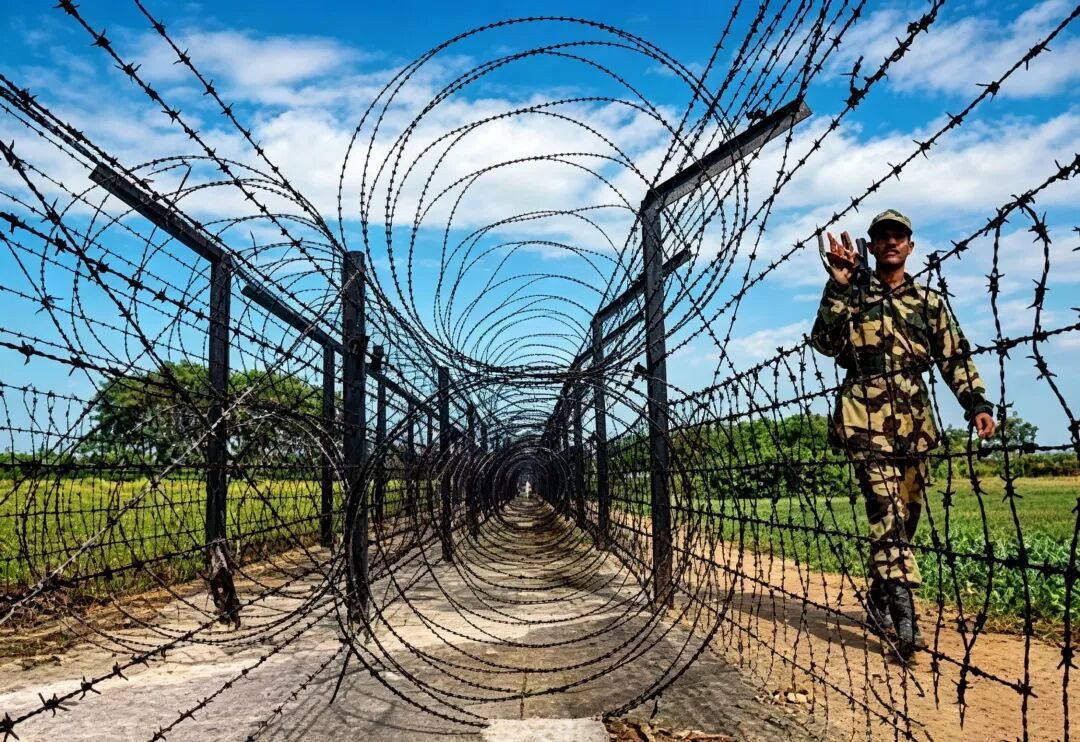
A barbed-wire fence along the India-Bangladesh border
On the surface, the dispute over the barbed-wire fencing along the India-Bangladesh border appears to be a border infrastructure project, but at a deeper level, it is a shift in India's neighborhood diplomacy. Outwardly, India champions the banner of "Neighborhood First," emphasizing connectivity, trade, development cooperation, and people-to-people ties. Actually, its neighborhood diplomacy is increasingly being reshaped by security anxieties, regional competition, and domestic politics.
For a long time, India has approached many security issues within South Asia — particularly cross-border matters — with a "big brother" mentality, believing that terrorism, illicit trade, refugee flows, ethnic and religious conflicts, and the involvement of external powers could all be transmitted into India through its borders.
India often elevates its own security concerns into default rules of regional order, interprets its neighbors' independent choices as challenges to India's special status, and uses "Neighborhood First" as a friendly discourse. Yet in practice, "Neighborhood First" implies an expectation that neighbors acknowledge India's natural dominance.
In recent years, other countries in South Asia have developed a growing sense of strategic autonomy, increasingly inclined to seek a balance among India, China, the United States, and other external powers, rather than remaining perpetually confined to an India-centric regional order. This has created considerable tension: India wants its neighbors to recognize its special status, while the neighbors wish to retain the right to make their own choices while acknowledging India's importance.
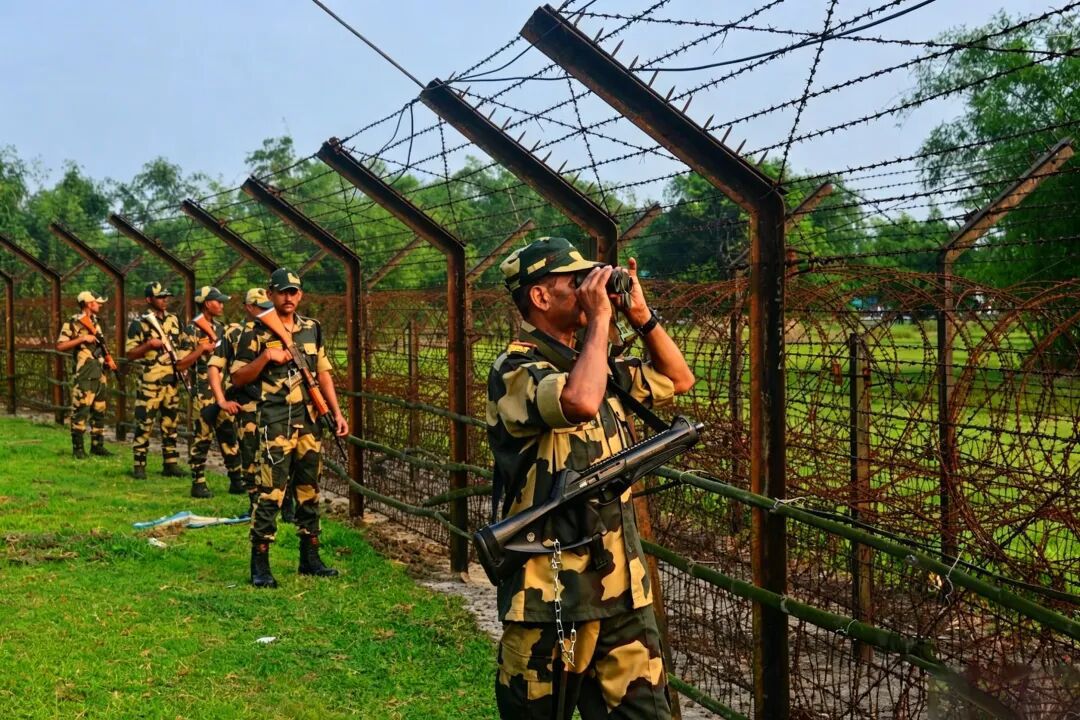
Inidan soldiers patrol at a barbed-wire fence along the India-Bangladesh borde.
The India-Bangladesh fencing dispute is precisely a microcosm of this tension. India sees it as border management, while Bangladesh believes India is using security as a pretext to expand asymmetric pressure unilaterally. The fencing can be framed in India as effective border control, but in Bangladesh, it is interpreted as distrust and disrespect. This further deepens mutual suspicion between the two peoples and undermines bilateral political trust.
For India, constructing a border fence may strengthen border control, but it cannot resolve the problems in its neighborhood policy. True regional leadership is not merely reflected in neighbors acknowledging India's strength; it is reflected in India's ability to convince its neighbors that cooperation with India is safer, more beneficial, and more dignified.
If India cannot shift from a mindset of unilaterally "controlling the neighbors" to building the capacity for "winning them," the "Neighborhood First" diplomacy will remain nothing more than a political slogan, and it will likely provoke more strategic mistrust and policy backlash across South Asia.
About the authors: Lei Dingkun is an associate professor at the Department of History and the School of Foreign Languages, East China Normal University. Li Hongmei is a research fellow at the Center for South Asia Studies, Shanghai Institutes for International Studies (SIIS).
