


Myanmar has a long way to go to rejoin ASEAN
By Xia Zhikuan and Xiang Jie|
Mekong News Network|


In April 2026, Min Aung Hlaing was sworn in as the new president of Myanmar in the capital, Naypyidaw, beginning a five-year term. In his inaugural speech, he sent a clear signal: "As a member of ASEAN, we will strive to restore normal relations with the organization."
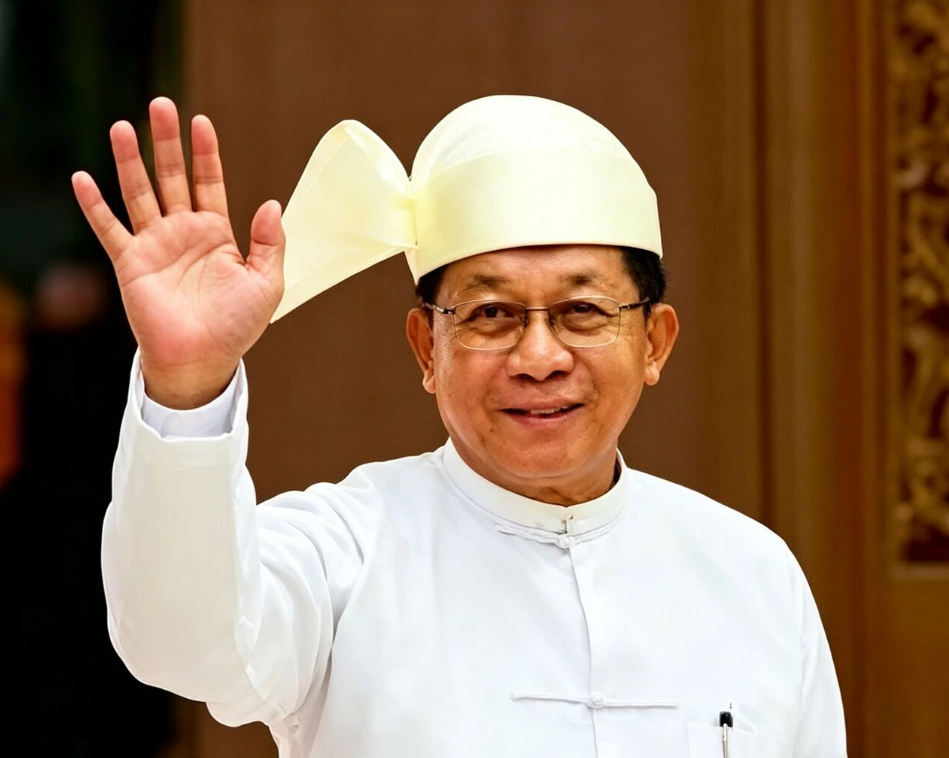
Min Aung Hlaing
However, ASEAN has confirmed that it will only invite a "non-political representative" from Myanmar to this year's ASEAN Summit. This marks the fifth consecutive year that Myanmar's leader has been excluded from the organization's highest-level political meetings since the political changes in Myanmar in 2021.
On the one hand, Myanmar's new government is making an overture to ASEAN; on the other hand, ASEAN's door to the country remains shut. Just how difficult is Myanmar's path back to ASEAN? Despite positive interactions between Myanmar and ASEAN in the past month, Myanmar still has a long way to go before it can rejoin ASEAN under the framework of the "Five-Point Consensus."
First, difficulty in implementing the 5-point consensus. ASEAN's policy baseline has always been the "Five-Point Consensus," in which "immediate cessation of violence and the initiation of dialogue among all parties" remains largely unimplemented in practice.
After the new government took office in 2026, Myanmar's authorities took some measures to ease tensions, such as releasing former President Win Myint, transferring Aung San Suu Kyi to a different prison, and extending peace talk invitations to ethnic armed organizations and the People's Defence Force (PDF).
However, conflicts across the country have not truly subsided. The Myanmar military's operations to regain lost territory have only intensified, and multiple opposition groups — including the Karen National Union (KNU), the Chin National Front (CNF), and the National Unity Consultative Council (NUCC) — have explicitly refused to engage in peace talks with the new government.
Under these circumstances, it is difficult for all parties in Myanmar to achieve inclusive dialogue. ASEAN welcomes the new government's proactive efforts to promote a positive direction but continues to insist on coordinating its stance on Myanmar within the framework of the Five-Point Consensus.
Given that the Five-Point Consensus has not been substantively implemented, ASEAN is reluctant to take the initiative to politically "loosen the reins" on Myanmar's new government. As Singapore's veteran diplomat Tommy Koh has noted, if ASEAN changes its stance without any concessions from Myanmar's authorities, it would harm the organization's reputation.
Second, disagreement within ASEAN. The ASEAN members remain divided over the Myanmar issue. Thailand, Laos, Cambodia, and Vietnam favor a pragmatic approach, advocating for gradual engagement to guide Myanmar back onto the right track. On April 22, Thai Deputy Prime Minister and Foreign Minister Sihasak Phuangketkeow visited Myanmar and expressed support for Myanmar's "step-by-step" return to ASEAN, offering to serve as a bridge to facilitate dialogue.
In contrast, Indonesia, Malaysia, Singapore, and the Philippines insist on an "action-for-action" stance, demanding that Myanmar adjust its policies based on the implementation of the Five-Point Consensus. Philippine Foreign Secretary Enrique Manalo stated on January 19 that while ASEAN members have the right to engage bilaterally with Myanmar's authorities, ASEAN as a whole must remain united and make decisions based on consensus.
The lack of internal consensus within ASEAN on accepting Myanmar remains one of the main obstacles to Myanmar's return.
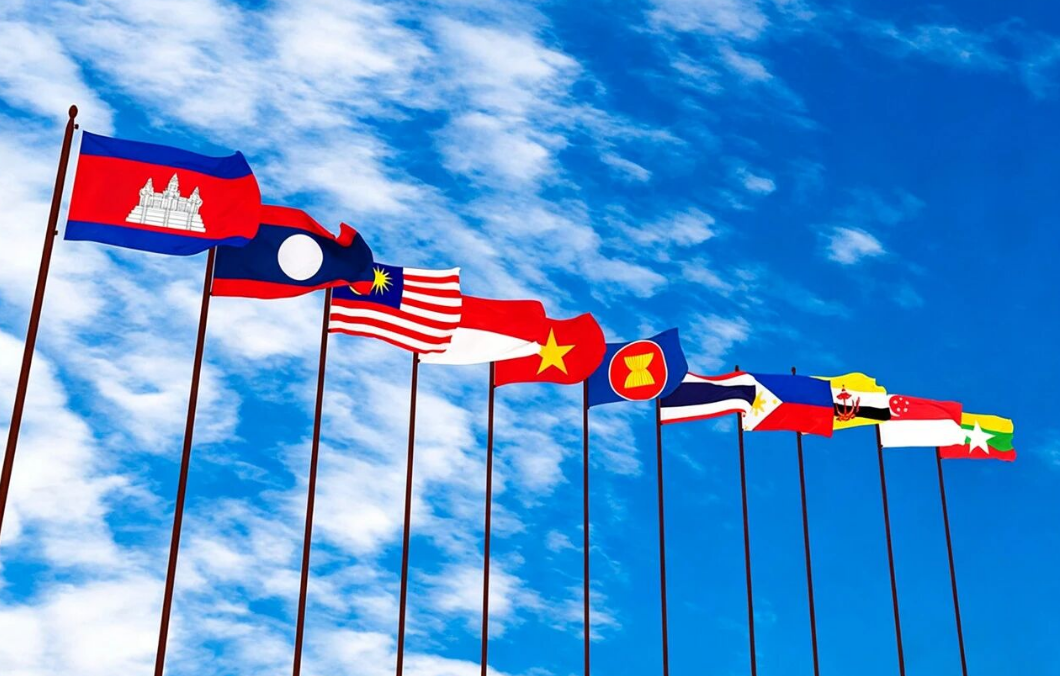
Flags of the ASEAN members
Third, the government’s dilemma. Myanmar's new government faces a dilemma between rejoining ASEAN and consolidating its power. On one hand, it hopes that rejoining ASEAN will break its diplomatic isolation, strengthen its governing position, and promote domestic economic development. This requires Myanmar to implement the Five-Point Consensus, ending violence and fostering dialogue.
On the other hand, years of internal conflict have altered the balance of power in Myanmar. The military's dominant position has weakened, while ethnic armed organizations have grown relatively stronger, posing a threat to the new government's survival.
To ensure regime security, the new government needs to enhance the military's strength and capabilities, reshaping the domestic power structure. This, in turn, makes dialogue among all parties in Myanmar more difficult and hinders the implementation of the Five-Point Consensus.
Faced with the tension between regime security and political reconciliation, the new government must first alleviate its "survival anxiety" before it can respond to the international community's expectations and take substantial steps toward rejoining ASEAN.
In short, Myanmar's journey back to ASEAN reflects not only the complexity of Myanmar's situation but also the tension within ASEAN between its traditional principle of non-interference and the need to address a member state's crisis. It tests whether ASEAN can overcome the collective-action dilemma under the principle of consensus and advance regional peace and development.
For Myanmar, the path back to ASEAN will not be achieved overnight. The new government's outward signals of reconciliation are only the first step. The obstacles and disagreements still await resolution. Ultimately, ASEAN's door can only be tapped open through concrete actions.
(The authors Xia Zhikuan and Xiang Jie are research assistants at the Center for China’s Neighbor Diplomacy Studies, Yunnan University.)
